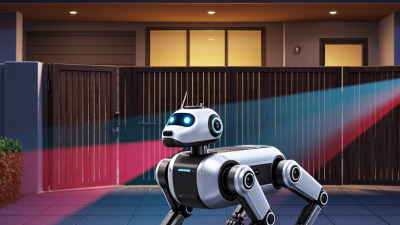
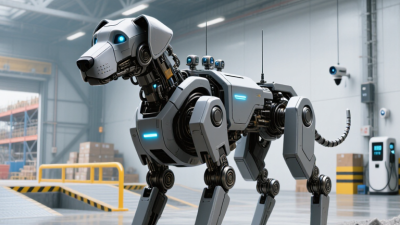
Why Choose a Robot Security Guard Dog?
A robot security guard dog can add a visible, mobile layer of monitoring to a property. Unlike a fixed camera, a patrol robot can move along planned routes, check entrances, and send alerts when its sensors detect unusual activity. Some models combine cameras, thermal imaging, microphones, and two-way audio, though capabilities vary by manufacturer. In practice, the value depends less on a dramatic appearance than on reliable navigation, clear image quality, and useful alerts.
Consider a warehouse aisle after closing, a long campus walkway, or a parking area with dim corners. A robot may help staff notice activity sooner and review footage without walking every route themselves. That matters. It does not replace trained personnel, sound access procedures, or a response plan. Wet surfaces, stairs, poor connectivity, and crowded spaces can limit performance, so a site assessment and supervised trial are sensible. Maintenance, battery life, data handling, and compatibility with existing systems also deserve careful review. Small details count.
Choosing one is not an automatic upgrade. Buyers should compare documented specifications, service support, and performance under conditions similar to their own site. Ask how alerts are verified, who can access recorded data, and what happens when the robot loses connection. A robot security guard dog may suit properties that need regular mobile observation, but it is not right for every setting. The honest answer is sometimes less impressive: a fixed camera or additional staff may work better. The best decision starts with a real security need, not a futuristic image.
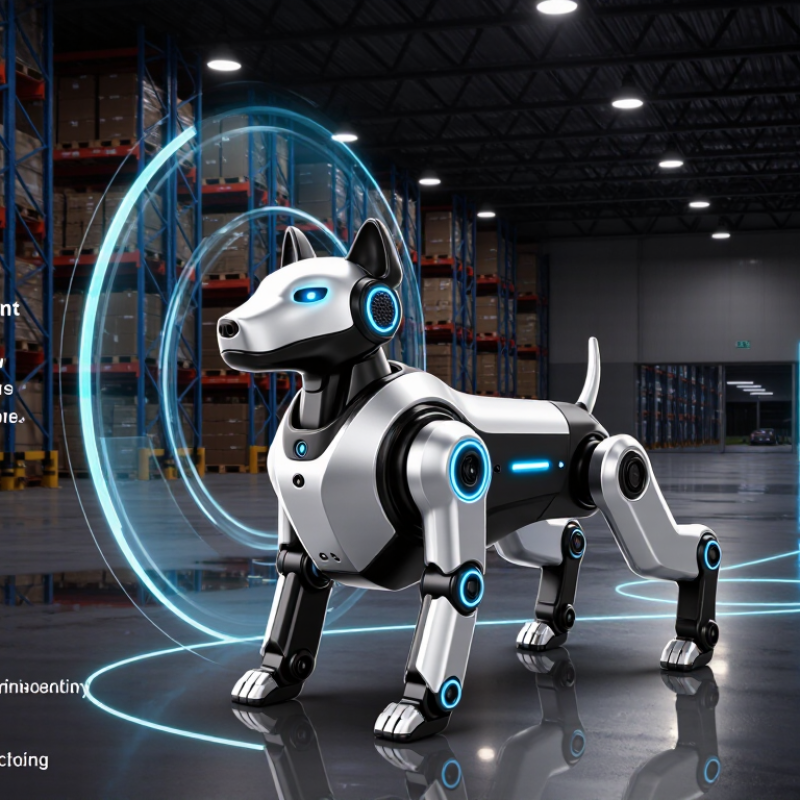
What a Robot Security Guard Dog Is: Mobile Robotics, Sensors, and Controls
Why Choose a Robot Security Guard Dog?
What a Robot Security Guard Dog Is: Mobile Robotics, Sensors, and Controls
A robot security guard dog is a mobile platform that patrols a site and reports what it detects. Its chassis may use wheels or legs to cross corridors, ramps, and uneven paving. Cameras provide visual context, while lidar measures distance to walls, people, and obstacles. Thermal sensors can help identify warm objects in low light, but they do not explain what those objects are. Sensors can disagree. That matters.
Controls turn sensor readings into movement and alerts. Route-planning software guides the robot around a mapped area; obstacle detection can slow or stop it. A remote operator may review a live feed or take control when the robot encounters something unclear. The International Federation of Robotics reported nearly 113,000 mobile robots sold for transportation and logistics in 2023, up 35% from 2022, in its World Robotics 2024 report. This is not a security-robot sales figure, but it shows growing use of mobile automation. A robot is not a magic guard. Reflective glass, rain, and cluttered floors can still confuse sensors, so real-site testing and human review remain essential.
How It Patrols: IFR Reports 4.28 Million Industrial Robots in Use in 2023
Why Choose a Robot Security Guard Dog?
How It Patrols: IFR Reports 4.28 Million Industrial Robots in Use in 2023
The International Federation of Robotics reported 4.28 million industrial robots in operation worldwide in 2023. That figure describes industrial robots broadly, not security patrol units alone. Still, it shows how automated machines have become part of everyday work. A mobile security robot applies similar strengths: repeatable routes, steady operation, and clear records of what it detects. It can travel a warehouse aisle, pass loading bays, and flag an open door or an unexpected obstacle. Consistency helps. Yet a familiar route can still change overnight.
A patrol robot can combine cameras, sensors, location data, and scheduled checkpoints. When it spots something unusual, it can send an alert for a person to review. This division of work matters: the machine gathers information, while trained staff interpret it and decide what to do. Good deployment also requires practical testing. Reflective floors, stacked pallets, poor lighting, or a blocked passage may affect performance. Automation is useful, but it is not magic; sometimes the environment is the weak link.
Tips: Start with one well-defined route. Check how the robot handles dim corners and temporary obstructions, then review its alerts with staff. Keep a manual patrol option available.
Why Choose a Robot Security Guard Dog?
How It Patrols: Growth in Industrial Robots
Industrial robots in operation worldwide reached 4.28 million in 2023. This growing installed base reflects the wider adoption of robotic automation; a security robot dog is a specialized application for mobile patrols, not a category counted separately in these figures.
Source: International Federation of Robotics (IFR), World Robotics. Values are rounded to two decimal places in millions.
Why Site Security Matters: FBI Records 847,522 U.S. Burglaries in 2022
In 2022, FBI records counted 847,522 burglaries across the United States. That figure is national, not a forecast for any one property. Still, it shows why site security deserves careful planning.
At a warehouse, risk can gather around quiet edges: a rear service door, stacked pallets, or a dim loading bay after shift change. A robot security guard dog can patrol mapped routes, capture video, and flag unusual movement for staff to review. Clear alerts matter. A timestamp, location, and short clip help a manager decide whether to call a colleague or inspect the area. The machine should support trained people, not replace them.
Numbers need context. Burglary definitions and reporting practices affect comparisons, and national totals cannot identify a site’s weak points. I would not treat a robot as a cure-all; blind spots, poor lighting, or an ignored alert can still undermine a plan. That is worth admitting. Pair patrol technology with working locks, steady lighting, access logs, and a response procedure staff actually know. Review incident records and patrol footage regularly, then adjust routes when deliveries, construction, or seasonal darkness change the site.
Why Choose a Robot Security Guard Dog? - Why Site Security Matters: FBI Records 847,522 U.S. Burglaries in 2022
| Metric |
2022 figure |
What it means |
Site-security consideration |
| Reported U.S. burglaries |
847,522 |
The FBI estimated 847,522 burglary offenses in the United States in 2022. |
Use national figures as context; assess the access points, operating hours, and incident history of each site individually. |
| Change from 2021 |
Down 7.5% |
The FBI reported that burglaries decreased by 7.5% compared with 2021. |
A national year-over-year decline does not eliminate risk at a particular property or replace a site-specific security assessment. |
| Estimated U.S. population |
333,287,557 |
The U.S. Census Bureau’s 2022 population estimate provides a denominator for a population-based comparison. |
Population rates help put the national count in context, but they are not a forecast of incidents at an individual site. |
| Estimated burglary rate |
About 254.3 per 100,000 people |
Calculated from the FBI burglary estimate and the Census Bureau’s 2022 population estimate. |
Consider local crime data and property-specific conditions when deciding whether additional monitoring is appropriate. |
| Average per day |
About 2,322 |
Calculated by dividing the FBI’s annual estimate by 365 days; it is a national daily average, not a daily count for every location. |
For sites with large perimeters or after-hours activity, compare available security approaches against defined coverage and response needs. |
| Robot security guard dog: evaluation criteria |
Site-dependent |
The FBI burglary statistics do not measure robot deployment, effectiveness, or crime prevention. |
Evaluate patrol coverage, detection and alerting capabilities, operating conditions, human oversight, and integration with existing security procedures. |
Sources and notes: FBI, 2022 Crime in the Nation / Crime Data Explorer (burglary estimate and year-over-year change); U.S. Census Bureau, 2022 national population estimate. The burglary rate and daily average are calculations based on those figures. National statistics alone do not establish the effectiveness of any security technology.
Where Robotic Patrols Fit: NIST’s 2023 AI Risk Management Framework
Why Choose a Robot Security Guard Dog?
NIST’s 2023 AI Risk Management Framework offers a practical way to assess where robotic patrols belong. It is voluntary guidance, not a product certification or a promise of safety. Its four functions—Govern, Map, Measure, and Manage—help teams consider risks across design, testing, and daily use. For a patrol robot, that means asking what it should detect, where it will operate, and who responds when it flags an event. A dim loading bay is not the same as a bright lobby. Context matters.
Teams can use the framework to check whether alerts are reliable, whether people understand how decisions are made, and whether sensitive data is handled carefully. Test the robot on wet pavement, around delivery carts, and in changing light. Record missed detections as well as useful alerts. Then set clear limits: a machine can report an unusual sound or route obstruction, but a trained person should review ambiguous cases. Human review helps. It does not remove every risk. Sensors can fail, and a confident-looking alert can still be wrong. That gap deserves honest attention before routine patrols begin.