What Is Potassium Sulfate Used For?

Potassium Sulfate is a widely used fertilizer that supplies two essential plant nutrients: potassium and sulfur. Unlike many potassium fertilizers, it contains very little chloride. This makes it valuable for chloride-sensitive crops, including potatoes, tobacco, citrus, grapes, and some vegetables. Farmers may apply it to soil, dissolve it for fertigation, or use it in carefully managed greenhouse systems.

Dr. Patrick Brown, a plant nutrition specialist at the University of California, has emphasized, “Nutrient management should be based on crop demand, soil supply, and responsible application.” That principle explains why Potassium Sulfate is not simply a universal solution. Soil tests matter. Crop history matters. Irrigation water matters, too. A dry handful beside a young plant may look harmless, yet excessive fertilizer can increase salt stress and waste resources.

Beyond agriculture, Potassium Sulfate supports specialty fertilizer blends and certain industrial processes. Its value becomes clearer where sulfur deficiency limits crop growth or where chloride levels must remain low. Potassium helps regulate water movement, enzyme activity, and crop quality. Sulfur supports protein formation and several metabolic functions. The details can be less tidy than product labels suggest. Application rates must match soil conditions, crop needs, and local guidance. Used carefully, Potassium Sulfate can improve nutrient efficiency and support healthier harvests. Used casually, it may deliver cost without meaningful benefit.
What Is Potassium Sulfate Used For?

What Is Potassium Sulfate and What Are Its Key Properties?

Potassium sulfate, often written as K₂SO₄, is a white, crystalline salt used mainly as a potassium fertilizer. It also supplies sulfur, an essential nutrient for plant proteins and enzymes. Unlike many potassium fertilizers, it contains little or no chloride. This matters for crops that react poorly to excess chloride, including tobacco, potatoes, fruits, and some vegetables. The material dissolves in water, although not as quickly as several other potassium salts. Its solubility can change with temperature and soil conditions.

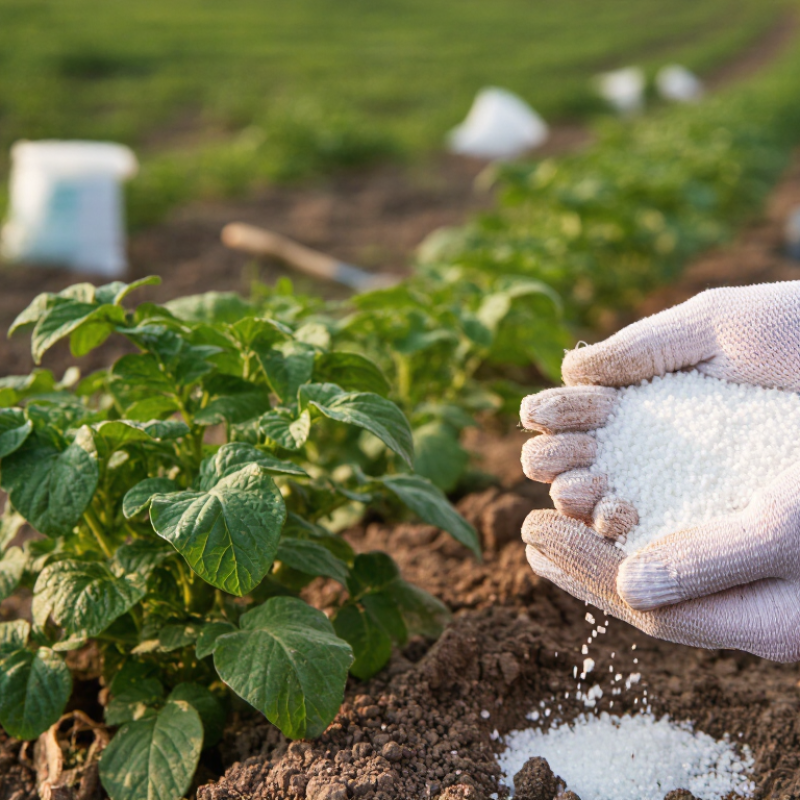
Its key property is its balanced nutrient profile: potassium supports water regulation, stronger stems, sugar movement, and stress tolerance, while sulfur supports amino acid formation. In a field, potassium sulfate may appear as fine granules scattered across dark soil, then dissolve after rainfall or irrigation. It does not usually change soil pH dramatically when applied at normal agricultural rates. Still, “more” is not automatically better. Excess potassium can interfere with magnesium or calcium uptake, and poor placement may injure young roots.

Tips: Use a soil test before application. Check the product’s nutrient analysis and calculate the needed rate carefully. Granules should contact moist soil, not be piled against seeds or stems. In dry conditions, irrigation can improve nutrient movement. Local crop guidance remains important because soil texture, rainfall, and crop demand vary. Personally, I would avoid treating potassium sulfate as a universal fix; a nutrient problem may be misdiagnosed without testing.

How Is Potassium Sulfate Produced and Processed?

Potassium sulfate is widely used as a fertilizer for crops that need potassium but respond poorly to excess chloride. Its production begins with carefully selected potassium-bearing salts and sulfate sources. The most established industrial route is the Mannheim process. In this method, potassium chloride reacts with sulfuric acid inside a heated furnace. The reaction forms potassium sulfate and releases hydrogen chloride gas, which requires controlled handling and recovery equipment.

Temperature control matters greatly. Too little heat can leave unreacted materials, while excessive heat may increase energy use and damage equipment. The furnace product is cooled, crushed, and sometimes dissolved in water. Insoluble particles are removed through filtration. The potassium sulfate solution then enters crystallization units, where solid crystals form as water is evaporated or cooled. The process is technical.

Some facilities use natural brines or sulfate-rich minerals instead. These materials may undergo dissolution, separation, and double-decomposition reactions with potassium salts. Their impurity levels can vary by deposit, so laboratory testing guides each processing step. This variability is easy to underestimate.

After crystallization, centrifuges or filters separate the crystals from remaining liquid. Dryers reduce moisture, and screens classify the particles by size. Granulation may improve spreading and reduce dust during agricultural application. Quality checks commonly measure potassium content, sulfate content, moisture, particle size, and unwanted chloride. Small differences can affect storage and field performance. In practice, no batch is perfectly uniform, and process adjustments are sometimes necessary.

How Is Potassium Sulfate Used in Agriculture?

Potassium sulfate, or K2SO4, supplies potassium and sulfur to growing crops. In agriculture, it supports water regulation, enzyme activity, root development, and crop quality. Sulfur also helps plants produce proteins and oils. This fertilizer is especially useful for crops sensitive to chloride, such as potatoes, tobacco, fruits, and some vegetables. Unlike potassium chloride, it adds no chloride to the soil.

Farmers usually apply potassium sulfate after reviewing soil and tissue tests. Granules can be incorporated before planting or placed near active roots during the season. Water-soluble grades may work through fertigation, but the solution should be checked for compatibility. Application rates depend on crop demand, soil texture, yield targets, and existing nutrient levels. Too much potassium can interfere with magnesium or calcium uptake. That mistake is easy to make. Field experience also shows that uneven spreading can create stronger growth in one row and weak growth in another.

Tips: Test the soil before purchasing fertilizer. Avoid placing concentrated granules directly against seeds or young stems. Apply smaller amounts when soil tests already show high potassium. Watering after application can improve movement into dry soil, but heavy irrigation may carry nutrients below shallow roots. Keep simple field records, including rate, timing, rainfall, and crop response. These notes make the next decision more accurate, even when the first plan was imperfect.

What Is Potassium Sulfate Used For? - How Is Potassium Sulfate Used in Agriculture?

Data Dimension Typical Information Agricultural Relevance
Common Name Potassium sulfate A potassium and sulfur fertilizer used where chloride inputs should be limited.
Chemical Formula K2SO4 Supplies potassium and sulfate sulfur to support plant nutrition.
Typical Fertilizer Grade Approximately 0-0-50 with about 17–18% sulfur A 100 kg application may provide about 50 kg K2O and 17–18 kg sulfur, depending on product analysis.
Primary Nutrient Function Potassium nutrition Supports water regulation, enzyme activation, photosynthesis, carbohydrate movement, and plant structural strength.
Secondary Nutrient Function Sulfur nutrition Contributes to amino acid, protein, enzyme, and chlorophyll formation.
Chloride Content No chloride is intentionally supplied by the fertilizer compound Useful for chloride-sensitive crops or fields where chloride accumulation is a concern.
Suitable Crop Groups Fruit, vegetable, tobacco, potato, grape, tree nut, and ornamental crops Often selected for high-value or chloride-sensitive crops, subject to soil and crop requirements.
Fruit and Quality Effects May support fruit size, firmness, color development, sugar movement, and overall quality when potassium is deficient The response depends on crop type, application timing, soil fertility, irrigation, and yield potential.
Application Methods Broadcast and incorporated, banded, fertigated, or applied through irrigation systems The method should match the product’s particle size, water quality, irrigation equipment, and crop nutrient schedule.
Water Solubility Moderately soluble; approximately 110–120 g/L of water at around 20°C Suitable for many fertigation programs, but tanks, filters, and injection lines should be checked for undissolved material.
Soil Conditions for Use Soils with inadequate available potassium, sulfur, or both Soil testing and crop removal estimates help determine whether potassium sulfate is appropriate.
Timing of Application Pre-plant, at planting, during crop growth, or through split applications Timing should reflect crop uptake patterns and reduce the risk of nutrient losses or salt injury.
Salt Consideration Still contributes soluble salts to the soil solution Excessive rates or concentrated placement can increase salinity risk, especially in dry soils or poorly drained fields.
Rate Determination Based on soil tests, crop demand, expected yield, tissue analysis, and other fertilizer inputs There is no single universal application rate for all crops, soils, or growing conditions.
Compatibility Consideration Should be checked before mixing with calcium-containing fertilizers or concentrated nutrient solutions Compatibility testing helps prevent precipitation, blocked emitters, and uneven nutrient delivery.
Best-Practice Summary Apply according to a documented nutrient management plan Use soil or tissue test results, follow local agronomic guidance, calibrate equipment, and avoid over-application.

What Industrial and Commercial Applications Does It Have?

What Is Potassium Sulfate Used For?

What Industrial and Commercial Applications Does It Have?

Potassium sulfate, or SOP, serves both agricultural and industrial markets. Its main commercial role is a chloride-free fertilizer for crops sensitive to salt or chloride. Fruits, vegetables, tobacco, and greenhouse plants often receive it through granular or dissolved applications. It supplies potassium for water regulation and crop quality, while sulfur supports protein formation. The International Fertilizer Association reports that global fertilizer consumption remains close to 200 million tonnes of nutrients annually, showing the scale of the market. SOP represents only part of this demand.

The industrial side is smaller but technically important. Potassium sulfate appears in specialty glass production, laboratory reagents, and selected chemical formulations. Manufacturers value its stable composition and low chloride content. The U.S. Geological Survey estimated total global potash production at about 71 million metric tons, measured as K2O equivalent, in 2023. That figure covers all potash products, not SOP alone. The distinction matters.

Not every application needs SOP. Cost, solubility, and local supply can limit adoption. In field experience, growers may also overapply potassium when soil testing is weak. That wastes material. Better decisions combine laboratory analysis, crop history, and irrigation data. Industrial users face a similar issue: purity requirements vary, and a fertilizer-grade product may not suit a process-grade application. Careful specifications are essential.

What Are Its Safety, Storage, and Environmental Considerations?

What Is Potassium Sulfate Used For?

Potassium sulfate is a fertilizer supplying potassium and sulfur to crops. It supports water regulation, enzyme activity, and protein formation. Growers often choose it for crops sensitive to excess chloride, including potatoes, fruits, tobacco, and some vegetables. Soil tests should guide application rates. More fertilizer does not always mean better growth.

Safety requires practical control of dust. Wear gloves, protective glasses, and a suitable dust mask during pouring or mixing. Avoid breathing airborne particles, and wash exposed skin afterward. If powder enters the eyes, rinse with clean water for several minutes. Keep the material away from food, animal feed, children, and pets. It is not highly reactive, but careless handling can still cause irritation. A common mistake is treating a dry fertilizer as harmless.

Store potassium sulfate in a cool, dry, well-ventilated place. Use a sealed, clearly labeled container on a raised pallet. Moisture can cause caking and make accurate spreading difficult. Keep damaged bags isolated and clean spills without creating dust. Environmental performance depends heavily on the application rate. Excess potassium and sulfate can move through soil or enter waterways after heavy rain. That may disturb nutrient balance and contribute to water-quality problems. Use buffer zones near drains and streams, and follow local agricultural guidance. I would also review the safety data sheet regularly, because storage assumptions can become outdated.

What Is Potassium Sulfate Used For?

Uses, safety, storage, and environmental considerations for potassium sulfate (K₂SO₄).

Primary use

A chloride-free source of potassium and sulfur for agricultural fertilizers, especially where chloride-sensitive crops or low-sulfur soils are involved.

Safety

The solid is not flammable, but dust may irritate the eyes, skin, and respiratory system. Avoid creating dust and use suitable protective equipment.

Storage

Keep tightly closed in a cool, dry, well-ventilated area. Protect from moisture and store away from incompatible materials.

Environmental considerations

Apply according to soil and crop requirements. Excessive application can increase soil salinity and add sulfate to water or drainage systems.

Chart values are calculated from the molecular composition of anhydrous K₂SO₄: potassium 44.9%, sulfur 18.4%, and oxygen 36.7% by mass. Commercial fertilizer labels commonly express the potassium content as approximately 50% K₂O equivalent.