China’s Refrigeration Unit Truck manufacturers serve food distributors, pharmaceutical logistics teams, and other businesses that move temperature-sensitive goods. Choosing a supplier is not simply a matter of comparing prices. A suitable Refrigeration Unit Truck must match the vehicle body, cargo volume, delivery route, and required temperature range. A unit that performs well on a short urban route may not suit long-distance transport with frequent door openings.
This guide introduces Chinese manufacturers and the factors buyers can examine when comparing them. It considers cooling capacity, insulation, energy use, control systems, installation experience, and after-sales support. Practical details matter: Can the unit hold a stable temperature during a summer loading stop? Are spare parts available near the operating region? Does the manufacturer provide clear test records and warranty terms? These questions can reveal gaps that a polished product page may not show.
Manufacturer claims deserve careful review. Product specifications are useful, but real performance depends on vehicle configuration, maintenance, and operating conditions. No single brand is best for every fleet. Some buyers may also find that public information is incomplete; that is worth noting, not ignoring. Where possible, request technical documentation, service references, and a demonstration using a comparable truck body. The following overview offers a starting point for informed comparisons, rather than a substitute for checking requirements directly with each supplier.
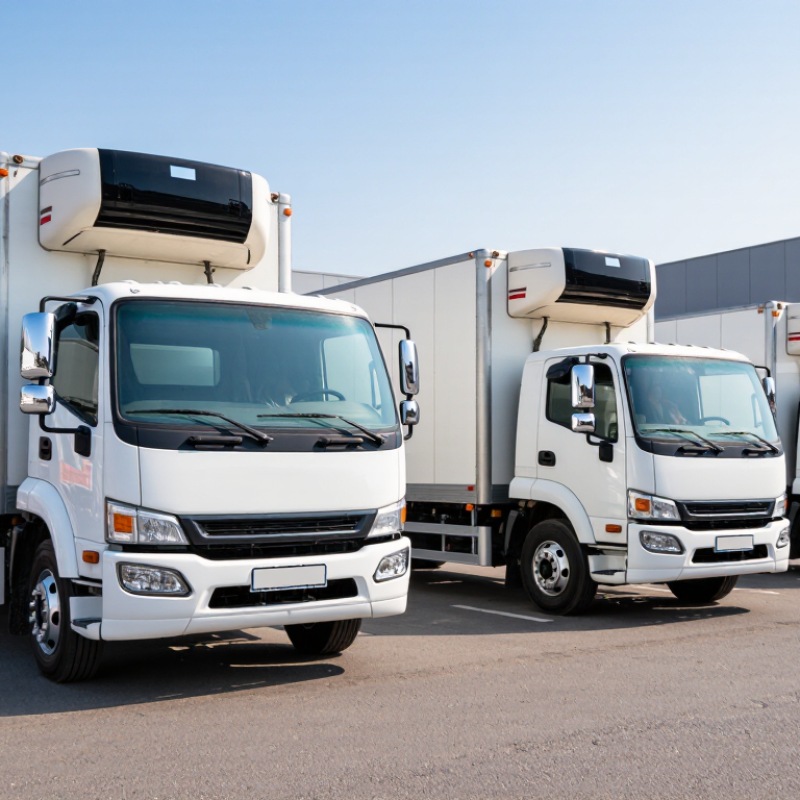
China Top Refrigeration Unit Truck Manufacturers
China’s Refrigerated Truck Industry: Scope and Development
China’s refrigerated truck industry supports a broad cold chain, from farm collection and food processing to urban delivery. Trucks connect cold-storage facilities with markets, restaurants, and distribution centers. Their performance depends on more than refrigeration capacity. Insulation, door seals, airflow, and temperature monitoring all matter during repeated stops.
The China Federation of Logistics and Purchasing reported that China’s cold-chain logistics market reached RMB 517.1 billion in 2023, growing 5.2% year on year. Its 2023 China Cold Chain Logistics Development Report also recorded 228.1 million cubic meters of cold-storage capacity. These figures show expanding infrastructure, but they do not measure every truck’s real operating performance. A gap remains.
Development is shaped by varied cargo and routes. Fresh produce may need rapid pull-down after loading, while frozen goods require stable temperatures over longer journeys. In practice, frequent door openings can undermine temperature control, especially on dense city routes. It is uneven. Buyers and fleet operators therefore need to assess usable payload, insulation quality, fuel or energy use, and service access—not just advertised cooling output. Better data logging can help reveal temperature swings, though monitoring cannot correct poor loading practices by itself.
| Industry Dimension | Scope and Typical Characteristics | Development Focus |
|---|---|---|
| Main vehicle formats | Refrigerated transport vehicles include insulated vans, medium-duty trucks, heavy-duty trucks, and refrigerated trailers. The appropriate format depends on route length, cargo volume, road access, and payload requirements. | Vehicle designs are increasingly tailored to urban delivery, regional distribution, and longer-distance transport rather than relying on a single body configuration. |
| Temperature-controlled cargo | Typical applications include fresh produce, meat, seafood, dairy products, frozen foods, and temperature-sensitive medicines. Common operating targets include approximately 0–8°C for many chilled products and −18°C or below for many frozen products; requirements vary by cargo and applicable rules. | More accurate temperature control and suitable operating procedures help protect product quality throughout loading, transit, and unloading. |
| Insulated body | A refrigerated body generally combines insulated wall, roof, floor, and door panels with sealed joints to reduce heat transfer and air leakage. Insulation performance depends on materials, construction, maintenance, and vehicle use. | Manufacturers focus on durable panel construction, improved sealing, reduced thermal bridging, and designs that are easier to clean and maintain. |
| Refrigeration system | Truck Refrigeration Units remove heat from the cargo space. System selection depends on body size, target temperature, ambient conditions, trip duration, and whether the vehicle needs to maintain or pull down the cargo temperature. | Development priorities include reliable temperature control, energy efficiency, lower noise, easier servicing, and better coordination between the vehicle and refrigeration equipment. |
| Single- and multi-temperature transport | Single-temperature bodies serve cargo requiring a broadly consistent set point. Multi-temperature bodies use divided compartments to carry products with different temperature requirements in one vehicle. | Compartment layouts, airflow management, and separate temperature monitoring are important considerations for mixed-load distribution. |
| Monitoring and traceability | Temperature sensors and data loggers can record conditions during transport. Telematics systems may also transmit location, equipment status, and temperature data when connectivity is available. | Digital monitoring supports exception alerts, operational records, and greater visibility across cold-chain logistics. |
| Energy and emissions | Refrigeration equipment consumes energy, and fuel use or electricity demand varies with vehicle type, ambient temperature, loading practices, route, and operating time. | Efficiency improvements include better insulation, reduced door-open time, optimized refrigeration control, and the development of electric vehicle and electric refrigeration solutions. |
| Key application sectors | Demand is associated with food production and distribution, supermarkets, catering, pharmaceutical logistics, and other businesses that require controlled-temperature transport. | Growth in organized cold-chain distribution and demand for dependable delivery are encouraging more specialized vehicles and service arrangements. |
| Operational considerations | Vehicle selection should account for payload, cargo-space dimensions, route conditions, loading frequency, required temperature, cleaning needs, and maintenance access. | Pre-cooling where appropriate, correct loading, unobstructed airflow, door management, and routine equipment checks support temperature stability. |
| Market scope | The industry covers vehicle chassis and bodies, insulation, refrigeration equipment, temperature-monitoring systems, maintenance, and cold-chain transport services. | Its development depends on logistics demand, infrastructure, technology adoption, operating costs, and requirements for food and pharmaceutical handling. |
| Note: Temperature ranges shown are common operating references, not universal specifications. Actual settings and vehicle configurations should follow the requirements for the cargo, route, and applicable regulations. | ||

