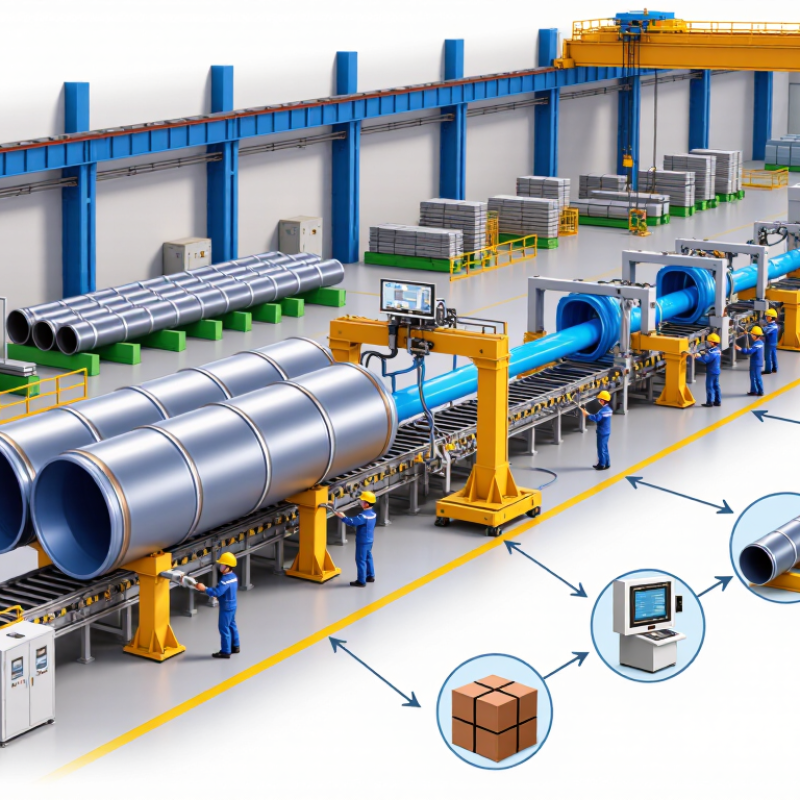
| Pipe outside diameter | LSAW line pipe is commonly specified in large diameters, often around 406–1,422 mm; actual mill limits vary. | Confirm the production line’s qualified diameter range, forming method, dimensional tolerances, and recent production records for the required size. | Out-of-range or low-volume sizes may require special tooling, additional setup, or procurement from a different mill. |
| Wall thickness | Project specifications determine thickness; approximately 6–50 mm is a broad planning range for many LSAW applications. | Check qualified thickness by diameter, steel grade, and manufacturing route. Review wall-thickness tolerance and measurement procedures. | Heavier wall thickness increases steel weight, transport charges, handling requirements, and often the base pipe price. |
| Pipe length | Common ordered lengths are project-specific; 6–12 m lengths are frequently used, subject to mill and transport limits. | Confirm achievable single lengths, permitted length tolerances, end preparation, and whether the order requires fixed or random lengths. | Length affects the number of field girth welds, shipping configuration, loading limits, and installation productivity. |
| Steel grade and standard | Specify the governing line-pipe standard and grade, such as the applicable edition of API Specification 5L, together with project addenda. | Request mill test certificates and evidence that the factory can meet the specified chemistry, tensile properties, impact requirements, and traceability rules. | Higher grades or supplementary project requirements can affect material sourcing, testing scope, production yield, and delivery time. |
| FBE coating system | Define the coating standard, service conditions, required coating thickness, surface preparation, and any repair or handling requirements. A single-layer FBE thickness around 300–500 μm is a common reference range, not a universal specification. | Verify coating-line qualification, abrasive-blast cleanliness and profile controls, powder handling, application records, cure controls, adhesion testing, and holiday detection procedures. | Coating thickness and testing requirements influence coating material use, line speed, inspection time, repair rates, and rejection risk. |
| Welding and pipe-body inspection | Inspection extent and acceptance criteria must follow the contract, applicable standard, and project-specific requirements. | Review welding procedure qualifications, operator qualifications, seam inspection methods, calibration records, and nonconformance procedures. | More stringent inspection can add direct inspection costs but may reduce repair, rejection, and downstream failure risks. |
| Testing and documentation | Typical requirements may include dimensional inspection, mechanical testing, hydrostatic testing, coating inspection, and traceable test records. | Agree on test frequency, acceptance criteria, third-party inspection access, document format, material identification, and final manufacturing record book contents. | Witness points, additional testing, and document review affect inspection fees and schedule; incomplete records can delay shipment or acceptance. |
| Production capacity and schedule | Capacity and lead time depend on pipe size, grade, order quantity, coating sequence, and the factory’s confirmed production schedule. | Ask for a written production plan, realistic inspection and coating dates, capacity allocation, and contingency arrangements for schedule changes. | A low unit price may be offset by extended lead time, schedule acceleration charges, inventory costs, or project delay exposure. |
| Packaging and transport readiness | Packaging, pipe-end protection, stacking, and shipping configuration should suit the transport route and receiving facilities. | Confirm loading method, coating protection during handling, export packing requirements, shipping marks, and responsibility for loading damage. | Freight, port handling, protective materials, storage, and coating damage repairs can materially change delivered cost. |
| Total cost comparison | Compare offers on the same technical and commercial basis: pipe, FBE coating, inspection, packaging, freight, insurance, duties, and delivery terms. | Use a line-item quotation and identify exclusions, payment terms, currency, quotation validity, warranty, and the applicable Incoterm. | Delivered project cost is more useful than unit price alone: include material, coating, inspection, logistics, financing, and schedule-related costs. |