Photoelectric Sensors are key components in modern automation systems. According to Dr. Lisa Chen, an industry expert, "Photoelectric sensors enable unprecedented precision in object detection." This technology uses light to detect the presence or absence of objects.
When a photoelectric sensor operates, it emits a light beam. If an object interrupts this beam, the sensor responds. This principle allows for versatile applications in manufacturing, packaging, and safety systems. However, there are challenges to consider. Environmental factors like dust or fog can impact sensor performance, leading to potential errors.
Over-reliance on Photoelectric Sensors can lead to unforeseen consequences. For instance, frequent misalignments can disrupt production lines. Businesses need to address these issues to optimize efficiency. While Photoelectric Sensors have transformed industry practices, understanding their limitations is crucial for successful implementation.
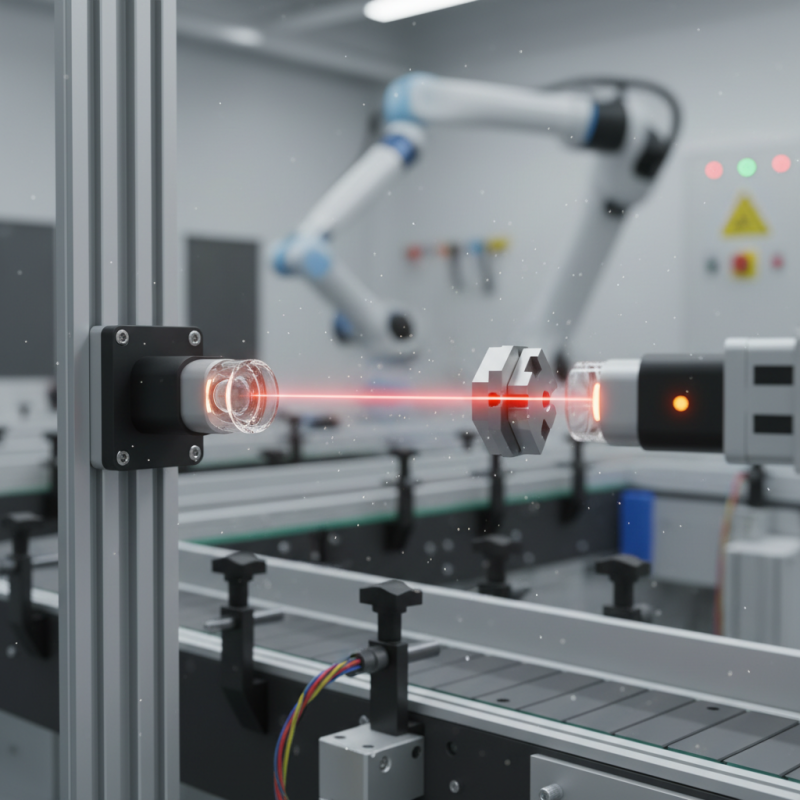
A photoelectric sensor is a device that detects objects or changes in the environment using light. It functions on the principle of light emission and reflection. These sensors are widely used in automation and safety systems. They can be found in various applications, from detecting the presence of an object to measuring distances.
Key components of a photoelectric sensor include a light source, a receiver, and an output circuit. The light source can be an LED or laser, emitting a beam of light. When an object interrupts this beam, the receiver detects the change in light intensity. This information is processed by the output circuit to trigger a response, such as activating an alarm or stopping a machine.
Tip: When selecting a photoelectric sensor, consider the environment. Dust, fog, or direct sunlight can interfere with sensor performance.
Another consideration is the type of output signal needed. Ensure it matches your system requirements. If in doubt, consult with a professional who can provide guidance on sensor selection.
Remember that not all photoelectric sensors are equal. Reflective sensors may work well in one scenario but fail in another. Test different models to find the best fit for your specific application.
| Component | Description | Function |
|---|---|---|
| Light Source | Emits light (e.g., infrared) | Illuminates the object |
| Receiver | Detects light reflected from the object | Senses object presence |
| Signal Processor | Processes signals from the receiver | Converts signals to electrical outputs |
| Output Stage | Provides output signal to control systems | Controls actions based on detection |
| Housing | Protects internal components | Ensures durability and reliability |

Photoelectric sensors play a critical role in automated systems. They detect objects without direct contact. There are three main types: through-beam, reflective, and diffuse. Each type has unique applications and benefits.
Through-beam sensors consist of a transmitter and receiver. They offer a clear detection range. This setup is less prone to interference. Reports indicate they can detect objects as small as 0.5 mm at distances up to 30 meters. However, they require precise alignment, which can be challenging in crowded environments.
Reflective sensors are simpler to install. They bounce the emitted light off a reflective surface back to the sensor. This type covers shorter distances but offers more flexibility in placement. Yet, their sensitivity can fluctuate based on the surface color and texture.
Diffuse sensors, on the other hand, incorporate the object directly into the detection area. They effectively work in varied lighting conditions but may struggle with distant or shiny surfaces. All these sensor types require careful consideration to match specific application needs. Understanding their advantages and limitations is essential for optimal performance in various industrial settings.
Photoelectric sensors are vital in many industrial applications. They operate based on light emission and detection. These sensors use light beams to detect the presence or absence of objects. When an object interrupts the light beam, the sensor signals a change. This simple principle drives numerous automated processes today.
The most common types of photoelectric sensors include through-beam, retro-reflective, and diffuse types. In through-beam sensors, the light source and receiver are opposite each other. The object breaks the beam, triggering a response. Retro-reflective sensors bounce light back to the receiver. In diffuse sensors, light reflects off the object to the receiver. Each type has unique advantages and limitations, depending on the application.
Tips:
Photoelectric sensors play a significant role in various industries, particularly in manufacturing and automation. These sensors detect objects without physical contact. They use light to sense changes in the environment, making them very effective in different applications. For instance, they can count items on a conveyor belt or detect the presence of a product on an assembly line.
In the realm of automation, photoelectric sensors help streamline processes. They can trigger alarms or halt machinery if an object is not in place. This enhances safety and efficiency in a factory setting. However, there are limitations. For example, dust or smoke can obstruct the light beam, leading to false readings. Maintenance is crucial to address these issues and ensure consistent performance.
Industries also utilize these sensors for quality control. They can check for flaws in products swiftly. Still, not all products are easily detectable. Some variations may slip through unnoticed. Continuous evaluation of sensor effectiveness is necessary. This ensures that they adapt to different manufacturing processes and environments, enhancing their overall utility.
Photoelectric sensors are seeing rapid advancements in technology, shaping the future of automation. The global market for these sensors is projected to grow at a CAGR of 10.2% from 2023 to 2030. This growth is driven by the rise in demand for automation across various industries, including manufacturing and automotive. Recent studies indicate that the market was valued at approximately $4 billion in 2022, highlighting significant investment potential.
With the evolution of Industry 4.0, photoelectric sensors are becoming smarter and more efficient. These sensors are now integrated with IoT capabilities. This allows for remote monitoring and data analytics. A report from a leading industry analyst states that over 40% of manufacturers are already using connected sensor technologies. However, adoption can be slow due to initial costs. Organizations must consider long-term benefits to justify the investment.
Tip: Start small with deployment. Pilot projects can help assess feasibility without large upfront investments. Evaluate performance metrics closely. It’s essential to recognize that not all sensor types will suit every application. Regularly revisit your sensor choice to remain competitive. The landscape is always changing. Organizations need to adapt to harness the full potential of photoelectric sensors.
This chart illustrates the growth of the global photoelectric sensor market from 2019 to 2023, showing a steady increase in market size, which reflects the increasing adoption of such technologies across various sectors.