A Hex Machine Screw may look simple in a catalog, yet small differences can affect fit, installation, and service life. Head height, thread pitch, material, and finish all matter. So does the space available for a wrench. For global buyers, product names are not always used consistently across suppliers. A clear drawing can prevent an avoidable mismatch.
The ten types in this guide cover common choices, from standard hex-head screws to designs suited to tighter assemblies or specific fastening needs. Each type has practical trade-offs. A taller head may offer better wrench access, while a compact option can suit restricted clearance. Stainless steel may be useful in some environments, but material selection still depends on the application and surrounding components. Details matter.
Before requesting a quote, compare dimensions, thread descriptions, drive access, and coating requirements. Check whether the supplier’s specifications match your drawing, and ask for clarification when terminology differs. Standards and product conventions can vary by market, so confirm the exact requirements for your project rather than relying on a catalog label alone. That step is easy to overlook. Even experienced teams sometimes do. This overview is a starting point, not a substitute for reviewing the application, samples, and technical documents. The right screw is the one that fits the assembly and performs as intended.
A hex machine screw is a threaded fastener with a six-sided head, designed for tightening with a wrench or socket. Its machine threads usually engage a tapped hole or a matching nut. Unlike a pointed wood screw, it is generally intended for preformed threads. The hexagonal head gives a tool a firm grip, which helps when access is limited or controlled tightening matters.
These screws appear in equipment frames, metal enclosures, brackets, and serviceable machinery. Buyers commonly compare thread diameter and pitch, screw length, head dimensions, and material. Stainless steel may suit damp settings, while other materials or finishes may fit different strength and corrosion needs. Check the assembly, not just the screw: a mismatched thread can damage a tapped hole. It is easy to overlook clearance around the head, too.
Tips: Measure the existing thread with a gauge when possible. Confirm the required length beneath the head, and choose a tool that fits the hex without slipping. For vibration-prone equipment, follow the design’s specified locking method; a tighter turn alone is not always a better fix. I would still verify the fit with a sample, since drawings and real parts do not always agree.
Hex machine screws are classified by two practical features: head geometry and thread design. A standard hex head accepts a wrench on six flat sides, while a flange head adds a broad bearing surface that can spread pressure across a panel. Slotted hex heads combine wrench access with a screwdriver slot, though the slot can deform under heavy torque. Fit matters more. Buyers should check head width, height, and clearance around the fastener before ordering; a head that looks suitable in a drawing may not fit beside a bracket.
Thread design determines how a screw engages its mating part. Metric threads are specified by nominal diameter and pitch, while inch-series options commonly include UNC coarse and UNF fine threads. ISO 4017:2022 covers hexagon-head screws from M1.6 to M64, providing a useful dimensional reference for global purchasing. ISO 261 sets the preferred series for metric thread diameters and pitches; ASME B1.1 defines Unified inch screw threads. These standards give buyers measurable specifications, not just catalog labels. In practice, I still verify pitch with a gauge and confirm whether the shank is fully threaded. Small mismatches can stop assembly cold.
What are the top 10 hex machine screw types for global buyers? A useful shortlist includes standard hex-head, hex washer-head, hex flange, serrated-flange, slotted-hex, combination-drive, captive-washer, full-thread, partial-thread, and fine-pitch screws. These names describe head styles or thread configurations, so they are not ten entirely separate standards. Some features overlap. That matters.
Choose the head for the tool access and bearing surface available. A washer or flange head spreads pressure across a wider area, while serrations can help resist loosening on suitable surfaces. Slotted and combination-drive heads allow different driver options, but the recess must match the installation tool. Captive washers stay attached during assembly, which can help when handling small parts. Full-thread designs provide engagement along most of the shank; partial-thread versions leave a smooth section that may suit clamping applications. Fine-pitch threads can provide more adjustment per turn, but require matching nuts or tapped holes.
Buyers should confirm diameter, length, pitch, head dimensions, material, coating, and applicable dimensional standard before ordering. Compare drawings, not just product names. A supplier’s “hex machine screw” may not match another supplier’s exact configuration. I would not treat this list as a strict ranking; terminology varies, and the right choice depends on the joint, tools, and environment.
Common ISO metric size options, compared by nominal thread diameter
The chart shows ten commonly used metric nominal diameters, from M2 to M16. These are size options, not a sales ranking; actual availability depends on the applicable standard and supplier. Nominal diameter refers to the thread size, not the hex head width.
Hex machine screws may look alike in a parts bin, but material and finish change how they perform. Low- and medium-carbon steel suits many indoor assemblies; alloy steel supports higher strength when specified to the correct property class. Stainless grades resist many wet environments, but they are not immune to corrosion. The International Stainless Steel Forum reported 58.4 million tonnes of global stainless-steel production in 2023 in its Stainless Steel in Figures 2024 report. That scale does not make every stainless screw interchangeable. ISO 898-1 covers mechanical properties for carbon and alloy steel fasteners, while ISO 3506-1 covers corrosion-resistant stainless steel fasteners. Check the grade and property class, not just the word “stainless.”
Coatings add another distinction. Electroplated zinc is common for indoor use; zinc-flake coatings can provide corrosion protection without the same hydrogen-embrittlement risk associated with some plating processes. Hot-dip galvanizing creates a thicker coating, so thread fit needs attention. ISO 10683 specifies requirements for non-electrolytically applied zinc-flake coatings. For dimensions, ISO 4017 covers hexagon-head screws with threads to the head. A standard is not a service-life guarantee. Match coating, base metal, and exposure: a damp coastal installation needs different consideration from a dry cabinet. Fit matters. Salt-spray results can help compare finishes, but they do not perfectly predict field life. A coating label alone is not enough; verify the test method and assembly conditions before ordering.
| Screw Type | Typical Head and Thread Configuration | Common Materials | Common Coatings or Finishes | Relevant Standards or Specification Basis | Typical Uses and Selection Notes |
|---|---|---|---|---|---|
| 1. Standard Hex Head, Fully Threaded | External hexagon head; thread extends along the shank, subject to the product size and specification. | Carbon steel; stainless steel such as A2 or A4; brass for selected low-load applications. | Electroplated zinc, zinc-flake coating, hot-dip galvanizing, plain finish, or black oxide. Finish suitability depends on the environment and fastener material. | ISO 4017 covers metric hexagon head screws with product grades A and B. ISO 898-1 specifies mechanical properties for carbon and alloy steel fasteners; ISO 3506-1 covers specified corrosion-resistant stainless steel fasteners. | General-purpose joints where a fully threaded shank is suitable. Confirm thread size, property class, head dimensions, and any required corrosion protection. |
| 2. Standard Hex Head, Partially Threaded | External hexagon head with an unthreaded portion of shank and a threaded end. | Carbon or alloy steel; stainless steel grades selected for the service environment. | Zinc electroplating, zinc-flake coating, hot-dip galvanizing, or plain finish, as specified. | ISO 4014 covers metric hexagon head bolts with product grades A and B. ISO 898-1 and ISO 3506-1 provide relevant mechanical-property requirements for their respective steel types. | Often chosen when the joint design uses a plain shank in the clamped area. Check the required grip length and thread length rather than assuming they are interchangeable with fully threaded screws. |
| 3. Fine-Pitch Hex Head | Hexagon head with a metric fine-pitch thread; may be fully or partially threaded. | Carbon or alloy steel; stainless steel where corrosion resistance is needed. | Common options include zinc electroplating, zinc flake, hot-dip galvanizing where dimensions and fit permit, or a specified plain finish. | ISO 8676 covers metric fine-pitch hexagon head screws with product grades A and B; ISO 8765 covers fine-pitch hexagon head bolts with product grades A and B. Check the applicable edition and product form. | Useful where a fine thread is required by the design, such as for adjustment or a thinner thread engagement. Fine pitch is not automatically a stronger or more corrosion-resistant choice. |
| 4. Hex Flange Head | Hexagon head with an integral flange that spreads bearing load; flange may be smooth or serrated depending on the design. | Typically carbon or alloy steel; stainless steel is available for suitable applications. | Zinc electroplating, zinc flake, black oxide, or other specified finishes. Coating choice should account for mating surfaces and corrosion exposure. | ISO 4162 specifies small-series hexagon flange bolts. Other flange-head products may follow different national, industry, or drawing requirements; verify dimensions and whether serrations are included. | The integral flange can reduce the need for a separate washer. Serrated versions may resist loosening in some joints but can damage coated or soft mating surfaces. |
| 5. Inch-Series Hex Cap Screw | Hex head in inch dimensions; thread form and shank details depend on the specified size and product type. | Carbon or alloy steel; stainless steel; other materials when defined by the applicable specification. | Plain, zinc-plated, zinc-flake-coated, or hot-dip-galvanized finishes may be specified, subject to dimensional and application requirements. | ASME B18.2.1 covers inch-series square and hex bolts and screws. Material and mechanical requirements are specified separately, for example under applicable ASTM or other material specifications. | Used where the design calls for inch-series dimensions. Do not assume an inch-series cap screw is dimensionally interchangeable with a metric ISO hex screw. |
| 6. Slotted Hex Head Machine Screw | External hexagon head with a straight screwdriver slot; thread and head dimensions depend on the applicable machine-screw specification. | Steel, stainless steel, or brass, depending on the product specification and intended load. | Plain, zinc-plated, black oxide, or other specified finishes. Brass is commonly supplied plain or with a compatible decorative finish. | ASME B18.6.3 covers specified inch-series machine screws and related products. Confirm that the exact slotted hex-head form and dimensions are included in the selected specification. | Allows installation with a wrench or a suitable flat-blade driver. The slot can be less suitable for high-torque automated assembly than a wrench-only head. |
| 7. Hex Washer Head Tapping Screw | Hexagon washer-style head with a pointed or blunt end and a thread intended to form or cut a mating thread, depending on screw design. | Usually carbon steel; stainless steel is available for selected applications and designs. | Zinc electroplating, zinc-flake coating, or other finishes specified for the substrate and exposure. | ASME B18.6.3 includes specified inch-series tapping screws. The exact tapping-screw type, dimensions, and thread form must be identified in the purchase specification. | Commonly used to attach sheet metal or components where a compatible pilot hole or mating material is provided. This is a tapping screw, not a conventional machine screw for a pre-threaded hole. |
| 8. Hex Head Self-Drilling Screw | Hex washer-style head with a drill-point tip; point and thread geometry vary with the material and thickness being joined. | Typically hardened carbon steel; stainless steel versions are available for applications where their drilling capability and performance are appropriate. | Often supplied with zinc or zinc-alloy coatings, zinc-flake systems, or other application-specific finishes. | Dimensions and performance are commonly specified by a product standard, industry specification, or detailed drawing. Confirm drill-point type, material thickness range, and coating requirements with the applicable specification. | Designed to drill and fasten in one operation when used within its rated material range. It is a self-drilling screw rather than a conventional machine screw. |
| 9. Reduced-Head Hex Screw | Hexagon head with a smaller head width or height than a standard hex design; dimensions are product-specific. | Carbon or alloy steel; stainless steel or non-ferrous materials when defined by the drawing or product specification. | Finish options may include zinc electroplating, zinc flake, plain finish, or another specified coating. | Often defined by a manufacturer-neutral drawing, national or industry specification, or a product-specific standard. Do not assume ISO 4014 or ISO 4017 dimensions apply to a reduced-head design. | Used where wrench clearance is limited. Check head dimensions, available tool access, bearing area, and required mechanical properties before substitution. |
| 10. Captive-Washer Hex Head Screw | Hexagon head supplied with a retained washer, commonly a free-spinning washer; washer style and retention details vary. | Carbon steel or stainless steel; washer material may differ from the screw material and should be specified. | Common finishes include zinc electroplating or zinc-flake coating. Verify coating compatibility between the screw and captive washer. | Typically specified by a product drawing or supplier-neutral dimensional specification unless a specific standard is stated. Define screw dimensions and washer dimensions separately where necessary. | Useful when the washer must remain attached during handling or assembly. Confirm washer outside diameter, thickness, freedom of rotation, and corrosion requirements. |
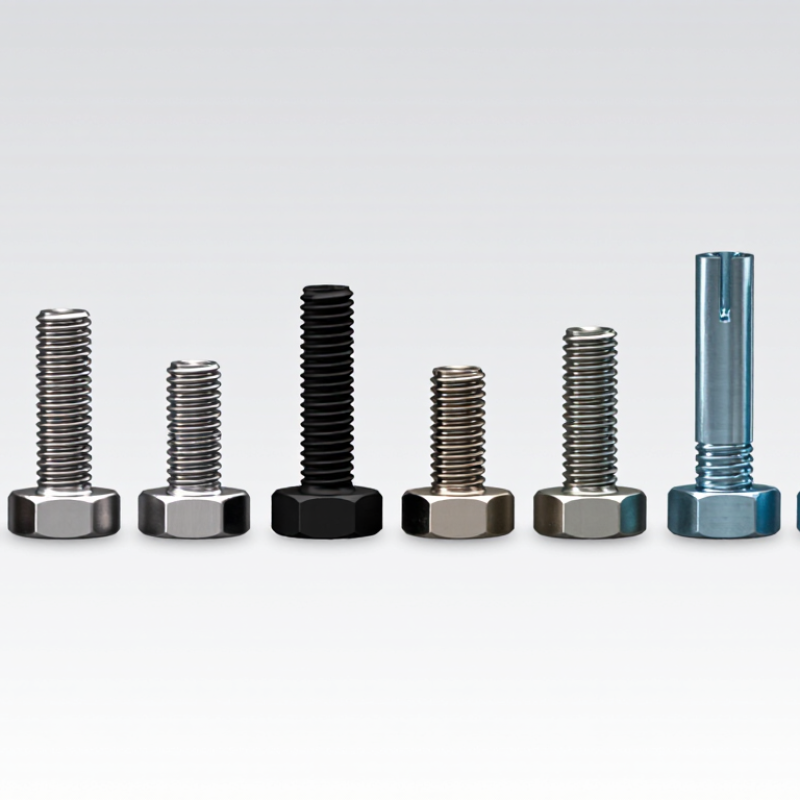
Buyer’s note: “Hex machine screw” is used broadly in some markets. Hex-head bolts, tapping screws, and self-drilling screws are distinct product categories. Always specify the thread system, dimensions, material or property class, coating, tolerance, and applicable standard; verify current standard editions and any project-specific requirements before ordering.
Global buyers should choose a hex machine screw by matching its dimensions and performance to the assembly, not by head shape alone. Start with the drawing or mating part: confirm metric or inch sizing, nominal diameter, thread pitch, and length measured from beneath the head. A 20 mm screw may not provide the same engagement in every joint. Check the material and finish against moisture, chemicals, and operating temperature. Stainless steel can help in damp settings, while a coated carbon steel screw may suit other applications. Verify the required strength with an engineer when loads or vibration are significant.
Consider access and installation, too. A standard hex head needs room for a wrench; a flanged hex head spreads bearing pressure but may not fit a recessed surface. Confirm the applicable dimensional standard, tolerances, and thread engagement with the supplier, then request samples for a fit check when ordering at scale. Inspect the first pieces for head clearance, clean thread starts, and consistent length. Small details matter. On paper, selection looks straightforward; real assemblies can expose a mismatch that a catalog image will not show. Avoid substituting a similar-looking screw without checking the specification and the mating thread.