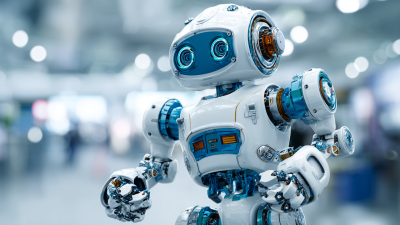
In recent years, the rise of commercial robots has significantly transformed various industries. These robots are not just tools; they are changing how businesses operate. Manufacturing, healthcare, and logistics are among the sectors benefiting most from these advancements.
Commercial robots improve efficiency and reduce labor costs. For example, automated robots in factories can work around the clock. They perform repetitive tasks with precision. However, their integration raises concerns about job displacement. Many wonder about the future of human workers in automated settings.
Moreover, while commercial robots enhance productivity, they also present challenges. Companies must navigate the complexities of deployment and maintenance. The balance between technology and human labor remains a critical issue. As industries adapt, the conversation around commercial robots continues to evolve. Their impact is undeniable, yet the questions they raise are equally important.
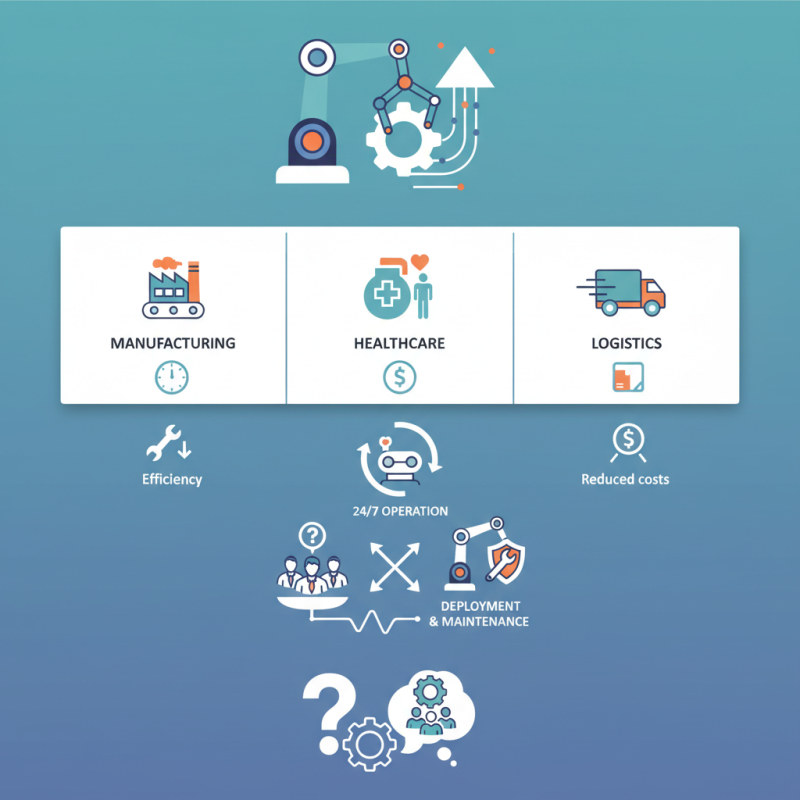
The adoption of commercial robots is on the rise. Various industries utilize them for different tasks. Recent statistics show an increase in implementation rates. For instance, in manufacturing, about 47% of companies have integrated robots. This figure underlines a strong trend.
Many sectors see robots enhancing productivity and efficiency. In warehouses, robots move goods swiftly. This efficiency can lead to faster deliveries. However, not all businesses feel prepared. About 30% of firms express uncertainties. They worry about cost, training, and integration challenges.
Job displacement is a concern for many employees. While robots handle repetitive tasks, human workers fear losing jobs. This sentiment may slow down adoption rates in some areas. Companies must evaluate how to balance automation with their workforce. Building a strategy that respects both innovation and human labor will be essential.
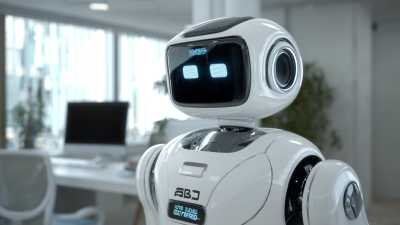
The integration of robotics in manufacturing is reshaping productivity. According to recent industry reports, 70% of manufacturers have adopted robots to streamline operations. Robots handle repetitive tasks, improving precision and speed. Human workers can then focus on creative and strategic aspects. However, this shift raises concerns about job displacement. Many fear losing their roles to machines.
Healthcare is another sector witnessing a robotic revolution. Robots assist in surgeries, improving accuracy. A study found that robotic-assisted procedures reduce recovery times by 20%. Yet, the reliance on technology introduces challenges. High costs and technical complexities can limit accessibility for smaller facilities. Keeping human oversight in critical care is essential, emphasizing the need for balance.
In logistics, robots are transforming supply chains. They automate inventory management and enhance order fulfillment. Research shows that warehouses using robotics can boost efficiency by up to 30%. Still, dependency on robots can lead to vulnerabilities. Technical failures or cyber threats may disrupt operations. The journey toward automation must prioritize security and resilience.
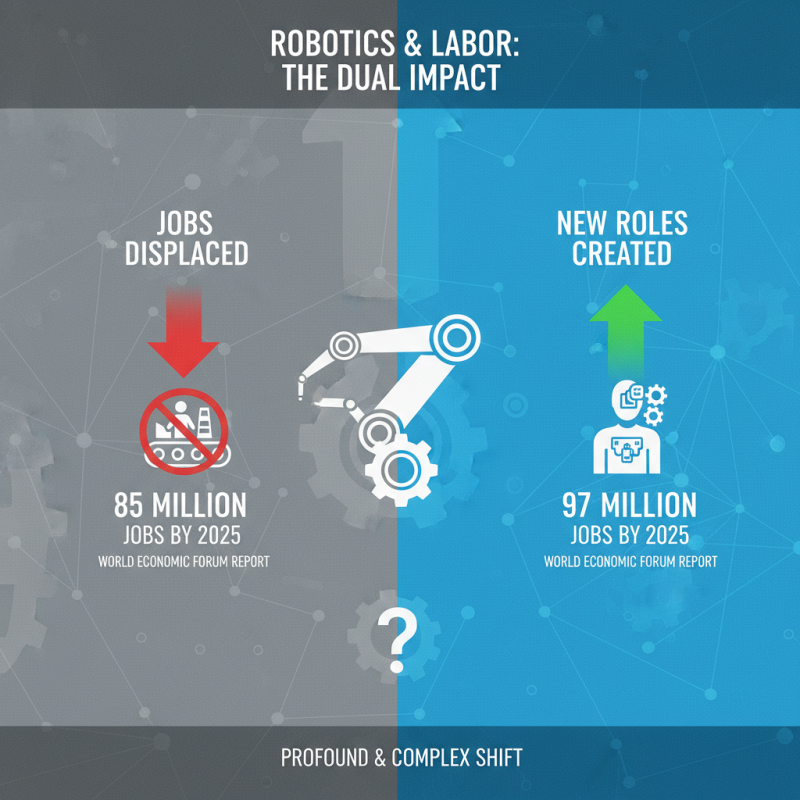
The impact of robotics on labor markets is profound and complex. A report from the World Economic Forum indicates that automation may displace 85 million jobs by 2025. Yet, it also predicts the creation of 97 million new roles. This contradiction highlights the dual nature of robotics in shaping labor dynamics.
Many sectors are experiencing shifts. For instance, warehouse jobs are declining as robots improve efficiency. But new opportunities emerge in robot maintenance and programming. A study by Deloitte reveals that over 800,000 new jobs were created in the U.S. in 2020 alone due to automation in industries like manufacturing and logistics. However, these roles often require different skill sets, leading to gaps in employment for less skilled workers.
The challenge lies in retraining. Many workers face significant hurdles transitioning into tech-based roles. There's a risk of widening the skills gap, leaving behind those unable to adapt. This evolving landscape demands attention and thoughtful strategies to harness the benefits of automation while minimizing job displacement. The need for continuous education and reskilling is more critical than ever.
Commercial robots are changing industries significantly. They offer remarkable cost efficiency. Many businesses report substantial ROI after investing in robotics. This trend is clear across various sectors like manufacturing and logistics. For example, automation in warehouses can cut labor costs by up to 30%. Robots work tirelessly, reducing errors and increasing speed.
In manufacturing, companies are utilizing robots for assembly lines. This process can speed up production by 40% in some cases. However, not all implementations are seamless. Some organizations face challenges with integration. Employees may resist these changes. Training workers to collaborate with robots takes time and resources. The balance between human and robotic labor is still a grey area for many.
Despite the hurdles, the advantages are undeniable. Robotics technology continues to evolve. Businesses are finding innovative ways to apply these tools. Yet, there is always room for improvement. The journey toward full automation is an ongoing challenge. Analyzing data on robotics ROI becomes crucial. Understanding costs versus benefits helps in informed decision-making. As industries adopt these technologies, staying adaptable is the key.
| Industry | Average ROI (%) | Cost Reduction (%) | Productivity Increase (%) | Deployment Time (months) |
|---|---|---|---|---|
| Manufacturing | 30 | 25 | 40 | 6 |
| Healthcare | 35 | 20 | 30 | 8 |
| Logistics | 45 | 30 | 50 | 5 |
| Agriculture | 50 | 35 | 45 | 10 |
| Retail | 25 | 15 | 20 | 4 |
The robotics industry is poised for significant growth. Recent studies indicate a surge in market value as businesses increasingly adopt automation solutions. Expected advancements in artificial intelligence are reshaping how robots interact with their environment. These changes promise enhanced efficiency across various sectors.
Technological developments are not without challenges. Integration into existing systems can be complex. Employees may face a learning curve when adapting to new robotic systems. There’s a need for training programs that address these concerns. Additionally, ethical considerations surrounding job displacement must be taken seriously.
The future may hold even more fascinating innovations. Imagine robots that not only perform tasks but also learn from their experiences. Predictive maintenance will become standard, reducing downtime for crucial operations. Sustainability will play a role too, as eco-friendly practices take center stage. The landscape of industries will indeed transform, but preparation is key.