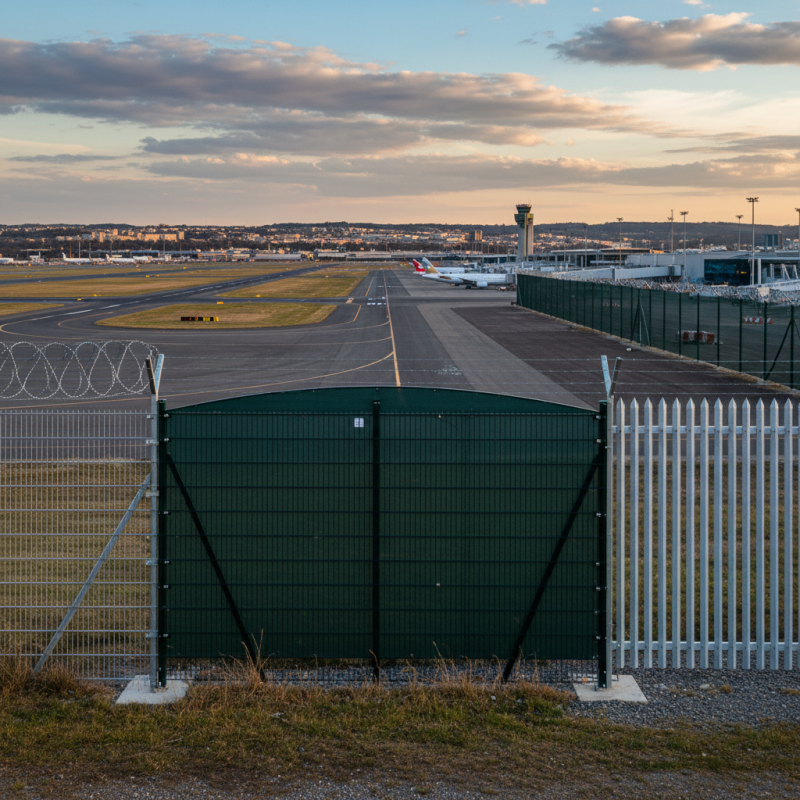
When it comes to airport fencing, several types are in play. Chain link fences are among the most common. They offer visibility, which can deter unwanted entry. These fences are cost-effective but may not provide the highest security. They come in various heights, typically ranging from 6 to 12 feet. However, they can sometimes be easily climbed. It's crucial to weigh the benefits against potential vulnerabilities.
Another option is solid security fences. These provide privacy and are made from materials like steel panels. They are more robust and resistant to damage. Solid fences are often used in high-security areas, but they can obstruct visibility. This might lead to instances where unauthorized entry goes unnoticed. An airport must consider its specific security needs and environment when choosing this type.
Electric fences are also gaining popularity. They are designed to deliver a non-lethal shock to intruders. These can be integrated with alarm systems. However, they require regular maintenance and monitoring, which adds to operational costs. The effectiveness of these fences depends on consistent upkeep, highlighting a key aspect of any fencing strategy. The right choice hinges on balancing security, visibility, and budget.

Choosing the right airport fence involves considering several essential factors. Security is paramount. A robust fence deters unwanted entry and enhances safety. Look for materials that resist tampering and withstand extreme weather conditions. Wire fencing, for example, can be effective, but its height and density matter. Higher fences with tighter mesh provide better security.
Accessibility is another key factor. Think about how personnel will access various areas. Gates must be strategically placed for easy entry while maintaining security. Also, consider visibility. A fence that allows for clear sightlines can quickly alert staff to any suspicious activity. However, over-reliance on visibility may overlook hidden vulnerabilities.
Budget constraints cannot be ignored. The cheapest option may lead to higher long-term costs due to repairs or replacements. A thorough cost-benefit analysis can guide decisions, ensuring that initial savings don’t compromise safety. Reflect on these aspects deeply, as the consequences of poor fencing choices can be significant. Balancing security, accessibility, and cost is challenging but crucial.
When selecting the right airport fence, material choice plays a crucial role. The materials must withstand harsh weather, corrosion, and potential vandalism. Chain-link fences, often galvanized, offer a cost-effective solution. A 2021 report by the American Security Association indicates that galvanized steel fencing can last over 20 years with proper maintenance. However, it might not provide enough visibility for security personnel.
Alternatively, welded wire fences provide enhanced strength and durability. Reports suggest these fences can resist impacts better than chain-link options. They serve both security and aesthetic purposes. The downside? Initial installation costs can be higher. For areas needing maximum security, consider solid panel fences. These can deter intruders effectively. Yet, they may reduce visibility, which can pose risks too.
Reinforced composite materials are emerging trends. They combine lightweight properties with resilience against elements. According to a recent survey, over 65% of airport managers are exploring these innovative materials for long-term solutions. Challenges still exist—these composites can be more expensive and complex to install. Each material has distinct pros and cons that require careful evaluation.
When considering airport fencing, security standards and regulations play a crucial role. Airports must comply with various guidelines to ensure safety and security. The Transportation Security Administration (TSA) mandates that airport perimeters are secured to prevent unauthorized access. Regulations dictate that fencing should be at least eight feet high and made of durable materials. This is essential for deterring intruders and wildlife.
In a 2022 study, it was found that over 70% of security breaches occurred due to inadequate perimeter defenses. Many smaller airports struggle with maintaining regulatory standards due to budget constraints. For example, a recent survey indicated that 40% of airports reported outdated fencing that failed to meet current security protocols. Investing in advanced fencing solutions can mitigate risks. Options like high-security chain link or anti-climb fences are increasingly popular.
Choosing the right fence involves understanding local regulations and specific airport needs. Not all security measures are effective in every situation. Some airports may need higher surveillance and additional barriers. It’s important to evaluate the specific threats faced. A one-size-fits-all approach can lead to vulnerabilities. Regular assessments and updates ensure compliance and adapt to evolving security challenges.
Choosing the right airport fence is crucial for security and safety. Once installed, maintenance becomes essential. Regular checks help identify wear and tear. Issues may not always be obvious at first glance. For instance, rust can accumulate on metal fences over time, affecting durability. Inspecting for corrosion should be a routine task.
Cleaning is key to long-term performance. Debris can build up and compromise visibility. This can range from dirt to foliage. If not addressed, it may lead to safety concerns. Simple tools can aid in periodic cleaning. Ensure that gates function smoothly, as they are high-use points. Lubricate hinges regularly to prevent sticking.
Material choice also influences maintenance requirements. Some materials may need more upkeep than others. Consider specific environmental factors, like salt in coastal areas. Weather can impact the integrity of the fence over time. Staying proactive reduces the risk of issues. Regular maintenance can extend the life of your airport fence significantly.