Choosing the best Outdoor Trampoline is less about picking the largest model or the lowest price. It is about matching the equipment to your yard, the people who will use it, and the time you can spend checking and maintaining it. A trampoline that looks sturdy in a product photo may not fit beneath low branches or leave enough clear space around it. Measure the intended area first, including room for safe access, and check the manufacturer’s installation and clearance guidance.
Look closely at the frame, springs or alternative connectors, jumping mat, enclosure, and padding. Compare the stated weight limit with your household’s needs, and confirm whether it applies to one user or total load. A well-fitted safety net and intact padding matter, but they do not remove the need for supervision or careful use. Not every design suits every family. That is worth admitting. A compact model may fit a small yard, while a larger one can demand more space and upkeep.
Weather exposure also deserves attention. Read the care instructions for wind, rain, and seasonal storage, rather than assuming outdoor materials need no protection. Check replacement-part availability before buying; worn pads or a damaged net can affect continued safe use. Reviews can help reveal practical issues, but weigh them alongside product specifications and the manufacturer’s guidance. There is no perfect choice. A thoughtful comparison can help you find a trampoline that fits your space, budget, and safety expectations—and one you can realistically maintain.
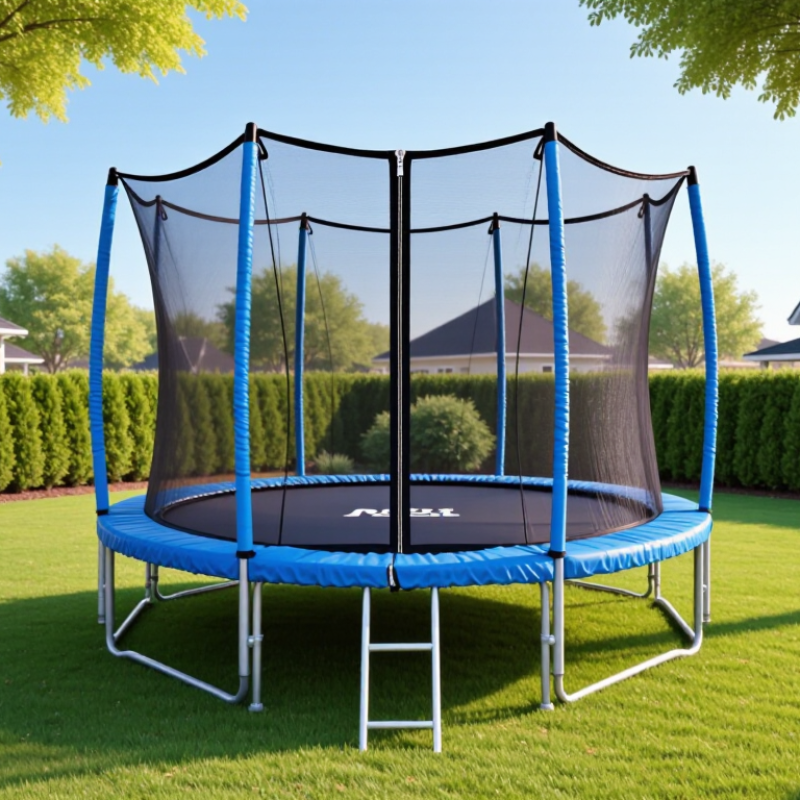
Start with the ground, not the trampoline. Measure a level, open area and compare it with the model’s full footprint. Leave the safety clearance specified in its instructions; the jumping mat is only part of the space needed. Check overhead branches, eaves, and nearby fences. A low branch can turn a roomy yard into a poor location.
Think about who will use it, and how many people may jump at once. Children of different ages may have different coordination and supervision needs. Adults should check the stated user and weight limits rather than assume a larger trampoline suits everyone. One jumper at a time is a sensible safety rule, even when the mat looks spacious. Check the instructions for age guidance, access steps, and recommended supervision.
Also picture the routine: Can an adult see the trampoline from the house? Is the route to it clear after rain, when grass may be slippery? It is easy to overestimate usable yard space; a garden table or storage shed often steals more room than expected. Measure twice. Then mark the proposed area with rope or chalk and walk around it before buying. A few minutes outside with a tape measure beats discovering that the gate barely opens.

Round trampolines usually suit casual family use: their layout tends to guide jumpers toward the center. Rectangular models offer a different feel and may fit narrow yards, but their larger-looking surface does not mean every area is equally safe. Measure the full frame, including clearance around it, before buying. Leave space for the enclosure and for safe access. A tight fit is a poor fit.
Compare weight limits carefully. Some labels specify a limit per jumper; others describe total load, so check the manual rather than guessing. The U.S. Consumer Product Safety Commission’s NEISS data estimated roughly 100,000 trampoline-related emergency-department injuries annually from 2014 to 2016. That figure is a useful reminder, not a prediction of risk for any one model. ASTM International’s F381 standard covers safety specifications for consumer trampoline systems; look for products that state compliance and provide clear setup instructions. Check the label. Even a high limit does not make multiple jumpers a sensible choice. I would still favor a smaller model with room around it over a larger one squeezed beside a fence. The yard measurement can be surprisingly easy to get wrong.
Comparing Trampoline Shapes, Sizes, and Weight Limits
Footprint area is calculated from the listed dimensions: circular area for round trampolines and length × width for rectangular trampolines. It is not the usable jumping area, which is smaller because of the frame and padding. Weight limits cannot be reliably determined from shape or size alone; check the specific trampoline’s stated user weight limit and occupancy guidance before buying.
Evaluating Frame Strength, Springs, Mat, and Weather Resistance
A sturdy frame starts with sound joints, even welds, and legs that sit flat on level ground. Check for corrosion-resistant steel, but inspect the coating closely: chips near welds can expose bare metal. ASTM International’s F381 safety specification offers a useful benchmark for consumer trampoline components and assembly. The CPSC’s 2014 NEISS estimate recorded 104,691 trampoline-related injuries treated in U.S. emergency departments. That figure is historical, not a prediction for any individual trampoline, but it underlines why construction details matter.
Springs should be evenly spaced, firmly attached, and fully covered by a secure pad. A mat needs tight stitching and UV-resistant material; faded, brittle fibers are warning signs. “Weather-resistant” does not mean weatherproof. Rain, sun, and freeze-thaw cycles can wear materials down, so check the manufacturer’s care instructions and remove snow promptly. I would not judge durability by a thick-looking frame alone; the spring attachments and mat seams deserve a close look, too.
Tips: Press each frame joint and check for movement. Inspect spring hooks for rust, and look underneath the mat for fraying. After storms, check the anchors and enclosure before use. Small flaws matter.
Checking Safety Features, Assembly, and Installation Requirements
Check that the frame feels rigid, the springs are fully covered, and the enclosure net closes securely. Look for clear assembly instructions and safety information referencing relevant ASTM trampoline standards. The U.S. Consumer Product Safety Commission estimated 104,691 trampoline-related emergency department visits in 2014, based on its NEISS data. That figure is a reminder to inspect safety details, not a prediction of risk for any one household. Small gaps matter.
Assembly quality depends on following the instructions, not just tightening every bolt. Confirm that all frame sections lock together and that net poles sit firmly in their sockets. Install the trampoline on level ground, away from fences, trees, and overhead hazards; follow the manufacturer’s specified clearance distances. Before use, check the spring cover, net seams, and anchor points. A careful setup can still miss something, so repeat the inspection after strong wind or moving the unit.
Choosing the best outdoor trampoline means comparing more than the purchase price. A cheaper model can cost more over time if its mat, springs, or frame need frequent replacement. Check whether replacement parts are readily available and whether the frame resists corrosion in your climate. After rain, inspect the mat and padding; in windy weather, secure the frame as directed by the manufacturer. Small details matter. The U.S. Consumer Product Safety Commission estimated 104,691 trampoline-related emergency-room-treated injuries in 2014. This is an older estimate, not a measure of today’s risk, but it reinforces the value of routine checks and clear safety instructions.
Warranty terms deserve a close read. Compare coverage for the frame, mat, springs, and enclosure separately, and note exclusions for weather damage, wear, or improper assembly. A long frame warranty may sound reassuring, but it may not cover the parts that wear fastest. I find warranty comparisons imperfect, too: generous terms are useful only if claims are practical and replacement parts remain available. Set a budget that includes these possible costs, not just delivery and assembly.
Tips: Before buying, price a replacement mat and spring set. Check seams, welds, and stitching for visible defects, and confirm the product follows applicable trampoline safety standards such as ASTM F381. Keep the receipt and warranty details somewhere dry. A little record-keeping helps.