How to Choose the Best Agricultural Drones for Your Farm?
Choosing the right Agricultural Drones for your farm can be a game-changer. With the agricultural drone market projected to reach over $5 billion by 2025, farmers are keen to enhance productivity. According to a report by Research and Markets, the rise in technology adoption among farmers is at an all-time high. Expert Dr. Emily Carter notes, “The right tools can transform farming practices, bringing efficiency and precision.”
Agricultural drones offer services like crop monitoring, precision planting, and livestock management. These unmanned aerial vehicles collect valuable data, helping farmers make informed decisions. They can cover large areas swiftly, but selecting the best option is not always straightforward. Various models come equipped with different capabilities, some suited for specific tasks.
Farmers must weigh factors such as range, battery life, and data analytics capabilities. Balancing quality and cost is essential. Some may find the initial investment daunting, yet the long-term benefits could outweigh the costs. Reflecting on personal needs and challenges is crucial when picking the right drone. The advancements in agricultural drones continue to evolve, demanding critical thought from potential users.
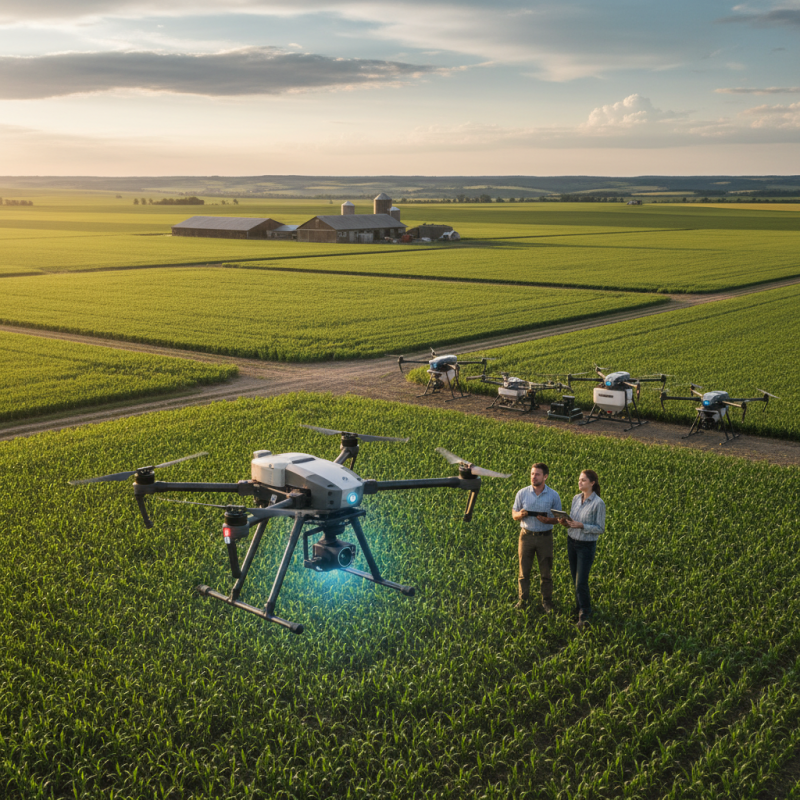
Identifying Your Farm's Specific Needs for Drone Usage
Identifying your farm's specific needs is crucial when selecting agricultural drones. Drones can assist with crop monitoring, soil analysis, and pest control. Each farm has its unique requirements, depending on size, crop type, and terrain. For instance, a large farm may benefit from drones with longer flight times and larger payload capacities. Conversely, smaller farms might need compact drones that are easier to navigate in tight spaces.
Consider your objectives. Are you focused on improving crop yield, managing irrigation, or detecting diseases? Assess the types of data you need. High-resolution images can support precision farming, while multispectral sensors can aid in plant health monitoring. The right features can make a difference. However, some farmers overlook maintenance costs or the learning curve associated with new technology.
Budget constraints often play a significant role. Drones come in various price ranges. A more expensive option might be desirable but ensure it meets your farm's specific needs. Evaluate potential return on investment carefully. Regularly revisit your chosen drone's performance. Being adaptable and open to adjustments is essential. With thoughtful consideration and ongoing assessment, you can effectively integrate drones into your farming practices.
Understanding Different Types of Agricultural Drones Available
When choosing agricultural drones, understanding the different types available is crucial. Drones primarily serve two functions: surveillance and spraying. Surveillance drones help monitor crop health through high-resolution imaging. These drones capture visual data, providing farmers with insights on crop stress, pest infestations, and nutrient deficiencies. A report by MarketsandMarkets suggests that the agricultural drone market is expected to reach $6.2 billion by 2025, highlighting their growing importance.
Spraying drones, on the other hand, are designed for applying pesticides, herbicides, and fertilizers. They save time and reduce chemical use, promoting sustainable farming practices. A University of California study found that drone-assisted application can decrease chemical waste by up to 30%. This efficiency allows farmers to cover large areas in a fraction of the time compared to traditional methods.
When selecting a drone, consider payload capacity and battery life. A drone's ability to carry heavier loads translates to more effective applications. Battery life influences how long a drone can operate before needing a recharge. Ensure the drone has a robust support network for maintenance and updates. Investing in training for your team can enhance drone utility.
Choosing the right type of drone is pivotal. It impacts productivity, sustainability, and cost-effectiveness. Make informed decisions based on your farm's specific needs. Regularly revisiting your choice will aid in maximizing efficiency and staying current with advancements in drone technology.
Comparison of Different Types of Agricultural Drones
Evaluating Key Features to Consider in Agricultural Drones
When selecting agricultural drones, several key features are crucial for maximizing farming efficiency. The payload capacity is among the most important factors. Drones that carry heavier equipment can perform more complex tasks, such as spreading fertilizers or planting seeds. According to a recent report from AgFunder, drones with a payload over 5 kg have been shown to improve crop yield by up to 30%.
Battery life is another critical consideration. Shorter battery life can lead to frequent downtime, hindering productivity. A drone with a flight time of at least 30 minutes is recommended for efficient operations. The ability to cover larger areas in one flight allows farmers to gather important data quickly. Research indicates that drones with advanced battery systems can cover up to 200 acres on a single charge.
Camera quality and sensor technology should not be overlooked. High-resolution cameras paired with multispectral sensors offer detailed insights into crop health. This technology can identify issues that may not be visible to the naked eye. Moreover, the integration of AI in drones allows for real-time analytics. However, farmers must consider their own technical skills to leverage these features effectively, as there is often a learning curve involved.
Assessing Budget and Cost-effectiveness for Drone Investment
When considering drones for agricultural purposes, budget and cost-effectiveness are crucial. A recent report from the Association for Unmanned Vehicle Systems International indicates that farms can see a return on investment of up to 80% when using agricultural drones. However, initial costs can range from $1,000 to over $10,000, depending on features. Evaluating these costs is essential before making a decision.
Investing in drones can yield significant savings in labor and resources. For instance, precision agriculture allows farmers to monitor crop health efficiently. According to a study by the USDA, adopting drone technology can reduce crop scouting costs by nearly 60%. Still, there’s a need for careful budgeting since the maintenance and operational costs add up over time.
Farmers should also consider additional expenses, such as software subscriptions for data analysis. Often, these extra costs can be overlooked. While drones can enhance efficiency and crop analysis, the initial financial commitment must be justified by their benefits. It’s wise to calculate potential savings against long-term expenses to ensure a sound investment.
Choosing the Right Vendor and Support Services for Drones
When selecting agricultural drones for your farm, choosing the right vendor is critical. The ideal vendor should have extensive experience in the agricultural sector. They should not only provide high-quality drones but also understand the specific needs of farmers. Look for vendors who offer robust customer support. This can ease the learning curve associated with using drones effectively.
Assess the vendor's reputation in the market. Reading reviews and requesting testimonials can provide insights into their reliability. Ensure that they offer training and continuous support. A vendor who understands the technology can assist in troubleshooting issues.
Consider the warranty and after-sales service they provide. A good warranty reflects the vendor's confidence in their products. Additionally, consider if they provide software updates. Keeping the technology current is essential for optimal performance. Investing in an agricultural drone is significant, and making an informed choice in a vendor is crucial to reducing risks and maximizing returns.