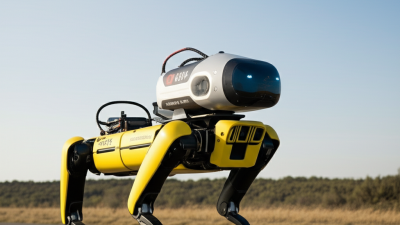
Choosing a quadruped robot dog in 2026 is less about its dramatic gait and more about the work it must reliably perform. Will it inspect a hot industrial corridor, carry sensors across gravel, or navigate stairs inside a facility? Each task changes the right balance of payload, speed, battery life, weather protection, autonomy, and maintenance support. Details matter. A machine that handles a smooth demo floor may struggle with wet thresholds or loose cables.
The International Federation of Robotics reported about 205,000 professional service robots sold worldwide in 2023, a 30% increase from 2022. That figure covers many robot types, not quadruped robots alone, so it signals broader adoption rather than dog-robot market size. At CES 2025, NVIDIA CEO Jensen Huang described physical AI as “the next wave of AI.” It is a useful lens, but not a buying checklist. Ask vendors for task-specific trial results, measured runtime under load, obstacle performance, spare-parts availability, and software-update plans. Watch the robot work with the actual camera, sensor, and payload you intend to use. Also compare total ownership costs, not just purchase prices. A polished demo proves little about years of field service. And no specification sheet fully predicts a muddy site. That uncertainty deserves attention. This guide lays out practical criteria for comparing platforms, checking claims, and choosing a quadruped robot dog that fits your real operating conditions.
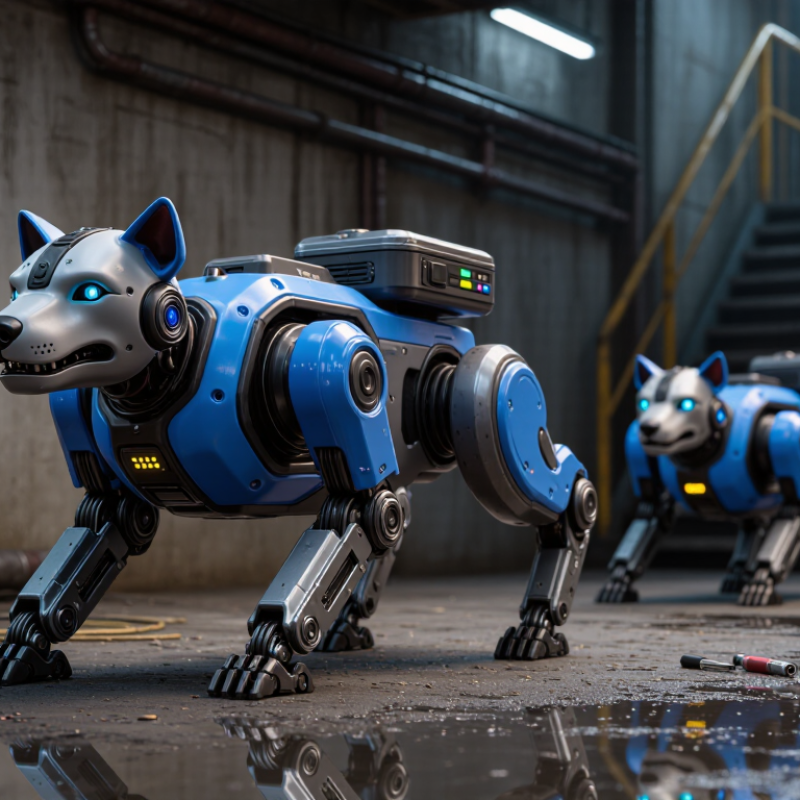
Before comparing quadruped robot dogs, write down the exact work they must perform. “Inspect a site” is too vague. Specify whether the robot will carry a thermal camera, read gauges, record video, or move small tools. Estimate the payload weight and the hours it must operate between charges. Small details matter. A camera mounted high may improve visibility but make the robot less stable on uneven ground.
Describe the environment just as carefully. Note stair heights, floor surfaces, narrow passages, loose gravel, standing water, temperature ranges, and weak lighting. A robot that walks smoothly across a clean lab floor may slip on wet concrete or struggle with cables underfoot. That changes everything. Also consider how often it must stop, turn, climb, or communicate through walls. These conditions affect foot design, sensors, battery capacity, and remote-control range. This part is easy to underestimate.
Separate essential requirements from preferences, then test them in a representative area before choosing a model. Measure the narrowest doorway and record the steepest ramp; do not rely on memory. Ask how the robot behaves when a sensor is blocked or its battery runs low. A specification sheet cannot show every awkward moment. I would leave room in the plan for a task that changes after the first week of use. A little uncertainty is normal, but it should be recorded rather than ignored.
Start with the work the robot must perform and the conditions it will encounter. Use this table to turn operational needs into practical selection criteria and field tests.
| Task or Use Case | Typical Environment | Capabilities to Prioritize | Questions to Ask | Practical Acceptance Test |
|---|---|---|---|---|
| Routine inspection | Industrial sites, utility facilities, corridors, and designated walkways | Repeatable navigation, dependable obstacle detection, useful camera payload, and sufficient operating time for the inspection route | Can it follow the route repeatedly? Can inspection data be time-stamped and linked to locations? | Complete the planned route on multiple runs, record the required views, and report missed areas or navigation interruptions. |
| Stair and uneven-ground access | Stairways, thresholds, ramps, gravel, and uneven outdoor paths | Stable locomotion, effective foot placement, body-clearance suitability, and safe recovery behavior | Which stair dimensions, slope limits, and surface types have been tested under the intended payload? | Traverse representative stairs and surfaces at a controlled speed, with a safety operator present and no unplanned contact or fall. |
| Remote visual assessment | Areas that are difficult, inconvenient, or unsafe for a person to enter | Remote control, low-latency video, controllable camera orientation, and a clearly defined communications-loss response | What happens if the video or control link is interrupted? Can the robot stop safely or return to a safe state? | Test the full control and video path in the intended location, including a planned temporary loss of communication. |
| Thermal or environmental sensing | Equipment rooms, outdoor assets, or sites with changing temperature and lighting | Payload compatibility, stable sensor mounting, suitable data storage, and operation within the sensor’s environmental limits | Are sensor measurements accessible in the required format? Does the payload change balance, runtime, or mobility? | Collect readings from known test targets and verify data quality, timestamps, and payload performance along the route. |
| Outdoor patrol | Mixed terrain, changing daylight, wind, dust, and variable weather | Outdoor-rated construction, robust localization, traction suited to the surface, and serviceable components | What are the documented operating limits for weather, temperature, dust, and wet conditions? | Run a representative patrol in expected conditions and inspect navigation continuity, image quality, and component condition afterward. |
| Operation around people | Shared work areas, public-facing sites, or occupied indoor spaces | Predictable movement, adjustable speed, clear status indication, emergency stopping, and appropriate operating procedures | How are pedestrians detected? What safeguards and supervision are required for the intended deployment? | Conduct a supervised trial with clearly marked boundaries, defined stopping rules, and documented responses to people entering the route. |
| Payload transport | Facilities or work areas where the robot must carry instruments or small equipment | Payload capacity at the required center of gravity, secure mounting, power availability, and stable movement under load | Does the stated payload allowance include the mount, cabling, and all accessories? How does load affect runtime and terrain performance? | Test the complete intended payload configuration on the route and verify secure attachment, stability, and remaining operating time. |
| Long-duration or repeated missions | Sites requiring multiple routes, shifts, or frequent daily deployments | Battery endurance under real payload and terrain, charging workflow, battery replacement process, and accessible maintenance | Is runtime measured in a configuration similar to the planned mission? How long do charging and routine checks take? | Run a mission-length trial with the intended sensors and route, then record usable operating time and turnaround time. |
Planning note: Requirements vary with payload, speed, terrain, weather, and operating procedures. Treat any stated performance figures as configuration-dependent and verify them through supervised tests in representative conditions.