Global buyers comparing China’s top tungsten tile suppliers need more than a polished catalog. Tungsten Tiles can differ in composition, dimensions, surface finish, and quality documentation. A tile designed for wear resistance may not suit a high-temperature assembly. Details matter.
Metallurgist Kurt Lassner’s published work concerns tungsten metallurgy, but I could not verify a direct quotation from him about tungsten tiles. Rather than invent one, this guide uses a practical editorial test: “Ask what the tile is made of, how it is finished, and how each claim is documented.” It is a buying question, not a quote from Lassner.
The suppliers in this guide should be assessed against concrete evidence: stated tungsten content, available size tolerances, inspection records, and sample consistency. Look for clear answers about custom dimensions and packaging, too. A small edge chip can matter when tiles must fit closely together. So can a finish that looks uniform in a photograph but varies across a batch.
Price deserves context. Compare like with like, including material specifications, testing, and delivery terms. A low quote may leave important details unclear. That does not make the supplier unreliable, but it does mean buyers should ask more questions. Supplier rankings can help narrow a search; they cannot replace sample checks and direct technical review. This shortlist is a starting point, not a guarantee.
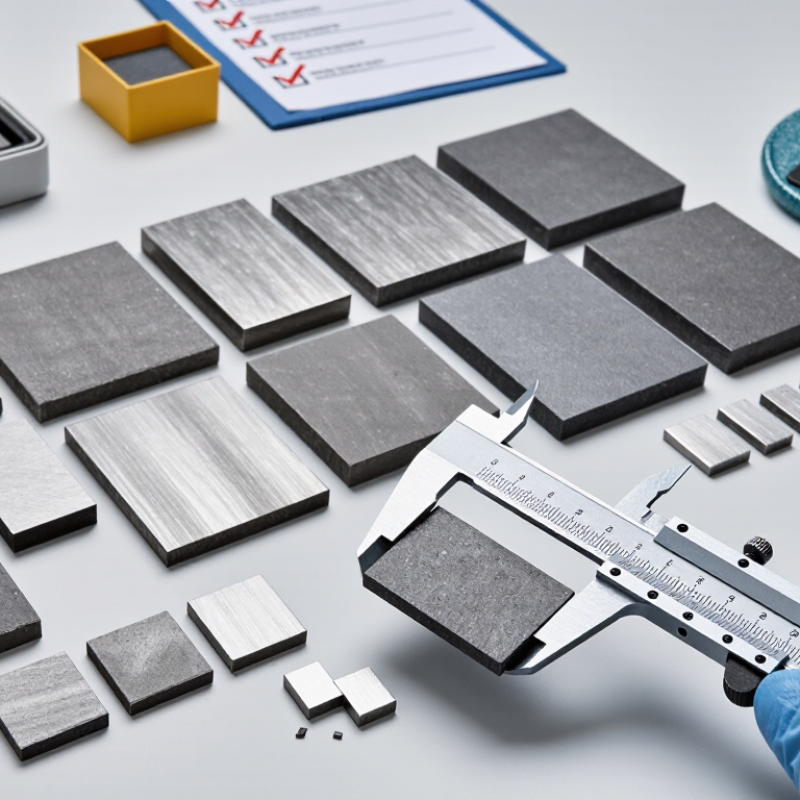
Tungsten tiles are solid pieces made from pure tungsten or tungsten-heavy alloy, and the distinction affects performance. Pure tungsten offers high-temperature stability; heavy alloys are often easier to machine and shape. NIST lists tungsten’s density at about 19.3 grams per cubic centimetre and melting point at 3,422°C. That density makes tiles useful where compact mass or shielding is needed. Details matter.
In industry, tungsten-based plates and tiles can serve as wear liners, furnace components, or shielding panels, depending on composition and design. The USGS Mineral Commodity Summaries 2024 identifies cemented carbides as a major tungsten use and estimates 2023 global mine output at 78,000 metric tons, including 63,000 from China. These figures underline the importance of checking material origin, specifications, and supply continuity. For shielding applications, thickness alone is not enough: radiation type, energy, joints, and installation gaps affect performance. A qualified engineer should confirm the design. Even a well-made tile can disappoint if its alloy or mounting method does not match the operating environment.
This buyer-oriented comparison covers ten common application areas and the supplier capabilities worth checking. “Tungsten tile” commonly refers to a cemented tungsten carbide wear tile—a hard carbide material combined with a metallic binder—not a tile made from pure tungsten metal. Grades, dimensions, and performance depend on the manufacturer and application; the items below are selection guidance, not a supplier ranking.
| No. | Industrial application | Typical tile role | Key material or design consideration | What to verify with a supplier |
|---|---|---|---|---|
| 1 | Mining and mineral processing | Wear protection for chutes, hoppers, and material-handling surfaces exposed to abrasive ore. | Balance abrasion resistance with impact toughness; the suitable carbide grade depends on ore, particle size, and operating conditions. | Grade data, tile drawings, installation method, and application references for comparable service conditions. |
| 2 | Cement and aggregates | Replaceable wear lining for equipment handling clinker, stone, or other abrasive bulk material. | Consider abrasion, impact, operating temperature, and the way the tiles are attached to the supporting structure. | Available tile shapes, dimensional tolerances, backing or fixing options, and guidance on joint layout. |
| 3 | Coal handling | Wear lining for transfer points, feeders, and other equipment exposed to sliding coal and mineral particles. | Choose a geometry and attachment system suited to the impact level and flow pattern; avoid assuming one grade suits every location. | Tile thickness and shape options, installation instructions, and compatibility with the equipment’s substrate. |
| 4 | Steelmaking and metal processing | Wear-resistant components or lining in selected material-handling equipment. | Assess heat exposure and thermal cycling as well as wear; cemented carbide grades have application-specific temperature limits. | Documented service-temperature guidance, grade composition information, and any relevant testing data. |
| 5 | Oil, gas, and slurry handling | Wear components in equipment that transports abrasive fluids or solids, where a tile-based design is appropriate. | Consider abrasion, erosion, pressure, fluid chemistry, and the risk of tile damage or detachment. | Compatibility information for the working environment, joining details, and quality inspection records. |
| 6 | Power generation and ash handling | Wear protection for selected ash, slag, or bulk-material transfer equipment. | Operating temperature, particle abrasiveness, impact, and maintenance access all influence tile selection. | Recommended grade for the stated conditions, tile layout guidance, and replacement or repair instructions. |
| 7 | Paper, pulp, and recycling | Wear protection in equipment handling abrasive recycled material or mineral-filled process streams. | Evaluate the actual contaminants and impact conditions; a highly hard grade is not automatically the best choice for impact-prone service. | Grade options, surface and edge finish, dimensional consistency, and sample availability for evaluation. |
| 8 | Construction and road materials | Wear parts or lining for equipment processing or conveying sand, gravel, and crushed stone. | Particle size, impact energy, and maintenance intervals help determine tile size, thickness, and grade. | Custom-size capability, drawing review, tolerances, and a clear process for confirming fit before production. |
| 9 | Agricultural and bulk-material equipment | Wear surfaces for selected equipment handling soil, grain mixed with abrasive material, or other bulk solids. | Consider abrasion, corrosion or moisture exposure, and whether the tile’s fixing method suits vibration and cleaning requirements. | Material and binder details, attachment options, corrosion-related guidance, and inspection criteria. |
| 10 | Custom machinery and wear assemblies | Engineered tile patterns for equipment with a defined wear zone and replaceable lining requirement. | Tile geometry, backing, joints, and installation method should be designed around the equipment and its service conditions. | Engineering support, drawing and sample approval, batch traceability, dimensional inspection, and agreed acceptance criteria. |

