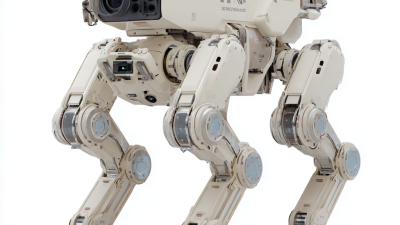
China Best 3D Printed Walking Robot Supplier for Global Buyers

China has become a major manufacturing base for robotics, additive manufacturing, and precision components. According to the International Federation of Robotics’ World Robotics 2024 report, China recorded the world’s largest annual industrial robot installations in 2023. This manufacturing depth supports faster sourcing, component integration, and production scaling for international buyers.

The Wohlers Report 2024 estimated that the global additive manufacturing industry exceeded 20 billion US dollars in 2023. That growth reflects stronger demand for lightweight parts, rapid prototyping, and customized production. A 3d printed walking robot can benefit from these capabilities. Its body may include lattice structures, integrated cable channels, and replaceable joint covers. These details can reduce assembly time and simplify design revisions.

Performance still matters more than appearance. A reliable supplier should explain motor specifications, battery capacity, walking stability, material selection, and test procedures. Buyers should request sample videos, dimensional drawings, load data, and quality records before placing larger orders. ISO 9001-based processes can also improve traceability across printing, machining, wiring, and final inspection.

China offers valuable production advantages, but distance can create communication and after-sales challenges. That part is sometimes underestimated. A capable supplier should provide clear English documentation, realistic lead times, spare parts, and remote technical support. The best choice is not always the cheapest factory. It is the partner that can repeatedly deliver stable movement, consistent surface quality, and documented improvements. Some prototypes may still show uneven gait or visible layer lines. Honest evaluation is better than exaggerated promises. For global buyers, this article examines how to assess China-based 3d printed walking robot suppliers through engineering capability, manufacturing evidence, compliance awareness, and dependable communication.
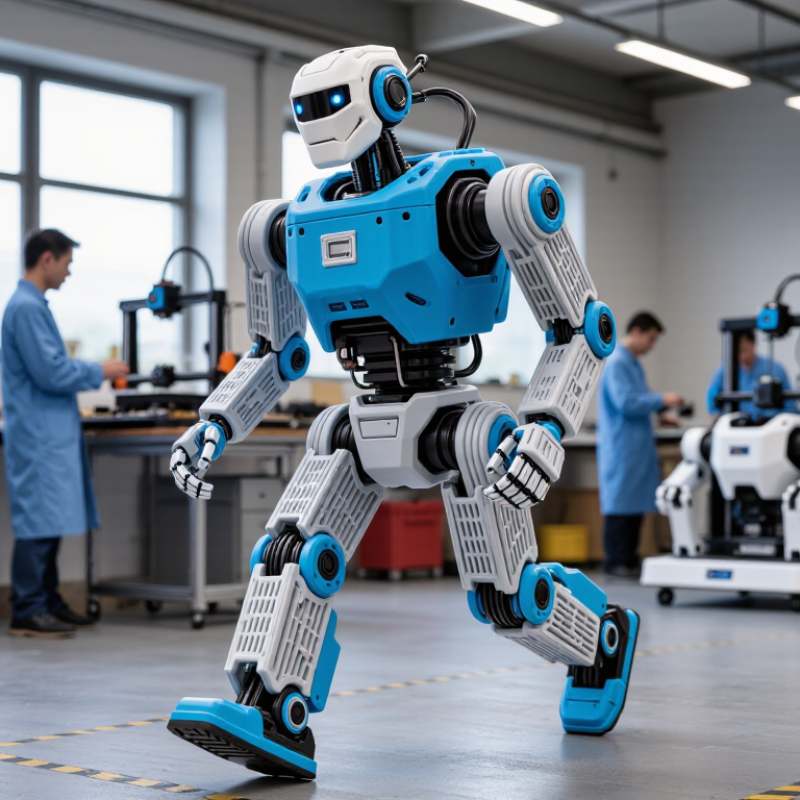
China Best 3D Printed Walking Robot Supplier for Global Buyers

China’s 3D-Printed Walking Robot Industry and Supplier Landscape

China’s 3D-printed walking robot industry is moving from laboratory prototypes toward small-batch commercial development. Suppliers commonly combine polymer printing, metal machining, embedded control, and final assembly. This mixed model reduces tooling costs and supports rapid design changes. A buyer may request a lightweight four-legged platform, then test revised ankle housings within days. Yet printed parts are not automatically production-ready. Layer direction, heat exposure, and repeated joint loads can change performance.

Experienced suppliers usually provide CAD review, material recommendations, sample builds, and basic motion testing. Ask for measured payload, walking speed, battery endurance, actuator torque, and operating temperature. Photos are useful, but test records are stronger evidence. Check whether the supplier documents dimensional tolerance, firmware versions, inspection steps, and replacement-part availability. Export experience also matters. Clear packing lists, technical manuals, and battery transport procedures can reduce customs delays.

China’s supplier landscape includes large engineering manufacturers, specialized robotic workshops, and flexible contract factories. Their capabilities differ sharply. Some excel at fast prototypes but lack stable quality control. Others offer better testing yet require higher minimum quantities. A practical evaluation should compare sample quality, communication speed, engineering ownership, and after-sales response. I would not trust a polished demonstration alone. Walking robots may perform well on clean floors but struggle on loose gravel, wet surfaces, or uneven thresholds. This gap deserves honest discussion before a purchase order.


Key Features of 3D-Printed Walking Robots for Global Buyers

3D-printed walking robots are gaining attention because their structure can be adapted quickly for research, inspection, and education. The Wohlers Report 2024 valued the global additive manufacturing industry at about $20.0 billion in 2023, after 13.5% growth. This expansion supports faster prototyping and more accessible custom production.

Lightweight frames are a key feature. Nylon, carbon-fiber-reinforced polymers, and other engineering materials can reduce moving mass. Lower weight may improve battery endurance and gait response. However, printed parts can fail around thin joints or poorly bonded layers. Real testing matters.

Modular design also helps global buyers. Replaceable legs, gearboxes, control boards, and battery compartments simplify maintenance across different markets. Internal cable channels can protect wiring from dust and repeated movement. Some designs also combine flexible feet with rigid load-bearing sections, improving contact on uneven floors. Not every printed robot performs well outdoors. Moisture, heat, ultraviolet exposure, and abrasive ground can shorten service life.

The International Federation of Robotics reported 541,302 industrial robot installations worldwide in 2023. That figure shows strong automation demand, but walking robots need different evaluation methods. Buyers should request payload data, operating temperature ranges, walking-cycle tests, spare-part availability, and safety documentation. A polished prototype is not enough. Ask for evidence.

Manufacturing Process and Quality Standards in China

China’s 3D printed walking robot supply chain depends on controlled production, not attractive prototypes alone. The International Federation of Robotics reported 541,302 industrial robot installations worldwide in 2023. China accounted for about 276,000 units, showing its manufacturing depth. However, walking robots require tighter coordination between printed frames, motors, sensors, and software.

A reliable process starts with CAD validation, material selection, and small-batch printing. Suppliers should record powder or filament lot numbers, printer settings, layer height, and build temperature. After printing, parts need dimensional inspection, surface finishing, and load testing. ISO 9001 supports documented quality management, while ISO/ASTM 52900 defines additive manufacturing terminology. ISO 12100 also helps assess mechanical risks. For robot assemblies, relevant clauses from ISO 10218 can guide safety reviews, although walking robots are not identical to factory arms. The process is not flawless. Warping, hidden voids, and inconsistent infill can still appear. CT scanning is useful for critical joints, but it raises inspection costs.

Tips: Ask for material certificates, inspection records, and sample test videos. Check ankle backlash, battery fit, screw-hole accuracy, and repeated walking cycles. A supplier claiming zero defects deserves careful questioning. Pilot production may reveal weaknesses that polished samples hide. Third-party testing can improve confidence, especially when exporting to markets with strict machinery and electrical requirements. Be specific about acceptance limits, because “high quality” means little without measured tolerances.

How to Evaluate a Chinese Walking Robot Supplier

China Best 3D Printed Walking Robot Supplier for Global Buyers

How to Evaluate a Chinese Walking Robot Supplier

Evaluating a Chinese walking robot supplier requires more than checking online photos. Ask for a live video showing walking, turning, stopping, and recovery after a minor balance loss. A serious supplier should explain the frame material, motor ratings, battery limits, sensor layout, and 3D printing process. Request a sample unit before placing a large order. Small details matter, including loose cables, noisy joints, and uneven foot contact.

Visit the factory when possible, or arrange an independent inspection. Review production records, quality checkpoints, and final testing procedures. Ask how many hours each robot walks before shipment. Check whether the supplier can provide test reports, user manuals, packing details, and documents needed for your market. Their answers should be specific, not promotional. Technical staff should discuss gait algorithms clearly and explain realistic operating limits.

Reliability also appears after payment. Ask about spare motors, printed parts, software updates, warranty response times, and remote troubleshooting. One useful test is to send the same technical question to sales and engineering. Their answers should match. Do not choose the lowest quotation automatically. In one trial order, a cheaper supplier delivered attractive samples but delayed replacement parts. That mistake was costly. I would also question my own evaluation: factory size can look impressive, yet daily quality control may still be inconsistent. A written inspection plan protects both sides.

Export Services, Customization, and Buyer Considerations

China Best 3D Printed Walking Robot Supplier for Global Buyers

Reliable export service begins with clear technical communication. A capable supplier should provide CAD files, material details, test records, and a realistic production schedule. Ask how the robot is packed for ocean or air transport. Shock-resistant foam, moisture protection, and labeled spare parts can prevent costly damage. Export documents should match the destination market, including invoices, packing lists, and applicable product compliance information.

Customization should start with the working environment, not appearance. Share the required stride length, walking speed, payload, battery runtime, and floor conditions. A robot used on smooth indoor flooring may fail on gravel or wet surfaces. Request a small prototype before approving mass production. A 3D-printed shell can look excellent while hiding weak joints or poor heat control. That risk deserves attention.

Buyer evaluation needs measurable acceptance criteria. Confirm walking tests, charging limits, noise levels, remote-control range, and software access. Discuss warranty coverage, replacement motors, training, and response time for technical support. Delivery estimates can change when custom parts or safety testing are involved. Allow extra time. I would also request videos from repeated gait tests, not one perfect demonstration. No design is perfect. Even experienced suppliers may overlook a loose connector after long operation, so inspection before shipment remains essential.

China Best 3D Printed Walking Robot Supplier for Global Buyers

This indicative procurement benchmark ranks the factors global buyers commonly review when selecting a 3D printed walking robot supplier. Safety, gait stability, customization capability, and export readiness are weighted most heavily because they directly affect deployment risk, product fit, and international delivery.