What Is the Best Smart Circuit Breaker in China?

Choosing the best Smart Circuit Breaker in China requires more than comparing prices or app features. It requires evidence from electrical testing, installation experience, and reliable industry data. The International Energy Agency’s Electricity 2024 report identified China as the largest contributor to expected global electricity-demand growth through 2026. That trend increases pressure on household and commercial protection systems, especially in apartments, factories, and photovoltaic installations. More connected loads also create more opportunities for overload, overheating, and poor-quality devices.

The best product should provide dependable overcurrent protection before offering remote control. A serious comparison should examine trip accuracy, breaking capacity, temperature rise, insulation performance, communication stability, and failure behavior during internet loss. It should also consider compatibility with China’s electrical standards, including applicable GB and GB/T requirements, certification status, and manufacturer test documentation. Industry research from MarketsandMarkets and Fortune Business Insights indicates continued growth in smart electrical protection and connected-home equipment, but market forecasts are not product guarantees. Marketing figures can look impressive.

Field details matter. Can the breaker trip when the Wi-Fi router is offline? Does the app record a real overload event? Is the neutral line monitored where required? Does the enclosure remain cool beside a crowded distribution box? These questions separate useful engineering from decorative software. No ranking is perfect. A polished interface may hide weak thermal performance, while a less attractive device may offer stronger protection. This guide therefore evaluates China’s leading options through measurable safety, connectivity, installation practicality, after-sales support, and long-term reliability. The final choice depends on the application, not simply the highest number of features.
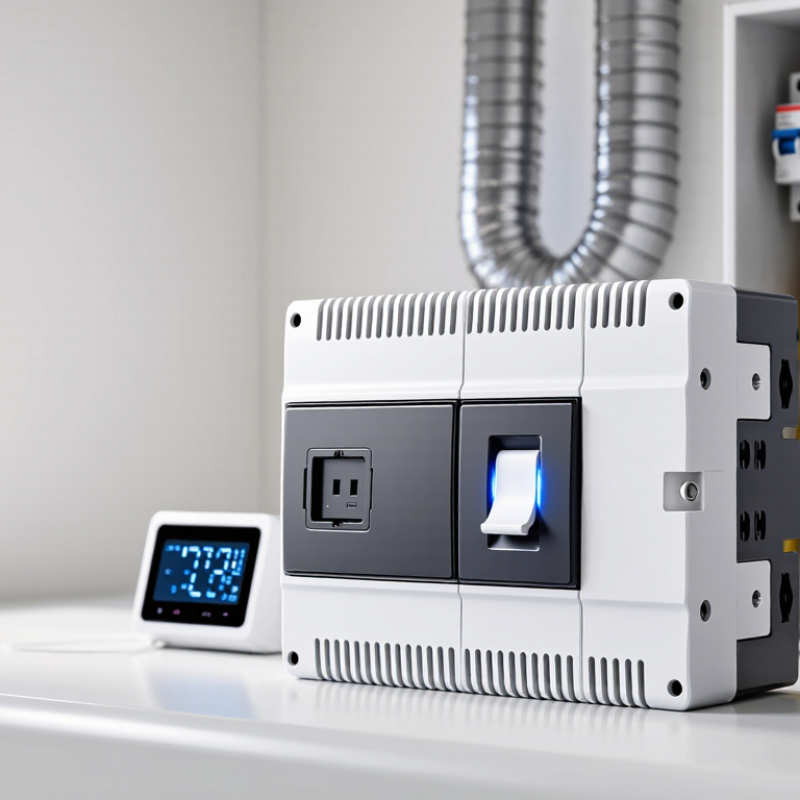
What Is the Best Smart Circuit Breaker in China?

What Is a Smart Circuit Breaker and How Does It Work?

A smart circuit breaker combines electrical protection with communication and control. It monitors current, voltage, temperature, and sometimes leakage in real time. When abnormal current appears, its internal trip mechanism disconnects the circuit. That is the essential protection. The smart function adds data, alerts, and remote switching through Wi-Fi, cellular networks, or a local gateway.

In practical use, a homeowner may receive an alert when a water heater draws unusual power. An operator can check the load history before resetting the breaker. Many models install on a DIN rail and include a manual lever for local control. This detail matters when the network fails. It is not magic. A connected breaker cannot correct damaged wiring or poor installation. Selection should consider rated current, pole configuration, breaking capacity, communication stability, enclosure conditions, and compliance with applicable electrical standards. The “best” choice depends on the building, not only its app.

Tips: Ask a qualified electrician to verify the panel and cable size. Test the manual trip function during commissioning. Keep firmware updated, but do not rely on software for basic safety. I would also compare real response times, because product descriptions can sound more precise than field performance. Small delays may be acceptable for monitoring, but not for protection. Never bypass a trip without finding the cause.

Key Features to Evaluate in Chinese Smart Circuit Breakers

A reliable smart circuit breaker in China should be judged by its protection performance, not its mobile app. Check the rated voltage, current, breaking capacity, and number of poles. These values must match the building’s distribution system and expected load. A kitchen circuit may need different protection from an air-conditioning circuit.

Look for accurate overload and short-circuit protection. Leakage detection is also important in damp areas. Useful models record energy use, trip events, operating temperature, and switching history. Remote control helps, but local manual operation should remain available during network failures. The connection method deserves close attention. Wi-Fi is convenient, while RS-485 can suit larger control cabinets and industrial installations. Data encryption, user permissions, and clear offline behavior are easy to overlook. They should not be.

In practical testing, check whether the breaker reports a trip within seconds and whether its readings stay stable under changing loads. A display showing perfect numbers is not proof of accuracy. Ask for test reports, applicable GB/T compliance information, and required Chinese certification details. Installation instructions should explain wire size, terminal torque, ambient temperature, and enclosure limits. Poor instructions create real risks.

Some products offer many features but provide weak event records. That trade-off bothers me. A simple interface with dependable protection may serve a home better than a crowded dashboard. Review after-sales support, firmware update procedures, and replacement availability before installation. Performance is more important than novelty.

What Is the Best Smart Circuit Breaker in China?

Key Features to Evaluate in Chinese Smart Circuit Breakers

This neutral 100-point evaluation framework prioritizes electrical safety and compliance, followed by reliable energy monitoring, remote control, communication interoperability, and installation practicality. The weights are intended for comparing products without using company or brand data.

Leading Types of Smart Circuit Breakers Available in China

China’s best smart circuit breaker depends on the installation, not advertising. The IEA’s Electricity 2024 report projects China’s electricity demand to grow by about 6% annually from 2024 to 2026. That growth increases pressure on safer, more observable distribution systems.

Wi-Fi breakers suit apartments, small offices, and retrofit projects. They connect directly to a router and usually provide remote switching, energy readings, and overload alerts. Zigbee breakers work better in larger homes because mesh communication reduces dependence on one router. Gateways still add cost. That choice is not always elegant. For factories, commercial buildings, and control panels, RS-485 with Modbus remains more practical. It supports long cable runs, stable local communication, and integration with energy-management systems. Technicians can diagnose faults without relying on cloud access.

NB-IoT models fit remote cabinets, temporary facilities, and scattered infrastructure. They use cellular networks and can report abnormal current from distant locations. However, network coverage and subscription fees require careful testing. Smart protection should also include the correct electrical function. An RCBO combines overcurrent and residual-current protection, while an AFDD can identify some dangerous arc faults. China’s GB standards and project specifications should guide selection, not app features alone. Field commissioning often reveals a weakness: accurate sensing cannot compensate for poor wiring, incorrect ratings, or weak maintenance procedures. The most dependable design matches communication type, protection level, enclosure conditions, and electrician access.

What Is the Best Smart Circuit Breaker in China? - Leading Types of Smart Circuit Breakers Available in China
Smart Circuit Breaker Type Typical Electrical Ratings Communication Method Main Smart Functions Protection Functions Typical Installation Best-Fit Applications Key Selection Considerations
Wi-Fi Smart MCB 1P or 2P; commonly 6–63 A; 230 V AC; 50 Hz; typically 4.5–6 kA breaking capacity 2.4 GHz Wi-Fi
Cloud or local mobile application
Remote ON/OFF control, schedules, power-status notifications, basic energy monitoring on selected models Overload and short-circuit protection; some models include over-voltage, under-voltage, or leakage protection DIN-rail consumer distribution boards; usually requires a stable neutral connection for electronic control circuits Apartments, small offices, rental properties, lighting circuits, and individual appliance circuits Requires reliable Wi-Fi coverage; check cloud dependence, data security, neutral-wire requirement, and manual override design
Zigbee Smart MCB 1P, 2P, 3P, or 4P; commonly 6–63 A; 230/400 V AC; 50 Hz Zigbee mesh
Requires a compatible gateway or hub
Remote switching, automation scenes, schedules, fault alerts, and integration with sensors and building-control systems Overload and short-circuit protection; optional residual-current or voltage-protection functions depending on product design DIN-rail residential or light-commercial panels with a nearby Zigbee gateway Smart homes, multi-room automation, energy-saving projects, and installations with many connected circuits More reliable than a single wireless link in larger networks, but gateway compatibility, mesh coverage, and commissioning must be verified
NB-IoT or 4G Smart Breaker 1P, 2P, 3P, or 4P; commonly 10–63 A; 230/400 V AC; 50 Hz NB-IoT4G LTE
Cellular network connection
Remote control, meter reading, event reporting, outage notifications, centralized asset monitoring, and scheduled operation Overload and short-circuit protection; some products add over-voltage, under-voltage, leakage, temperature, or phase-loss monitoring Remote or distributed DIN-rail panels where local internet or Ethernet is unavailable Temporary facilities, outdoor cabinets, distributed assets, agricultural sites, and remote energy-management projects Evaluate network coverage, SIM or data-service costs, operating-temperature range, cybersecurity, and fallback operation during communication loss
RS-485 Modbus Smart Breaker 1P, 2P, 3P, or 4P; commonly 6–125 A; 230/400 V AC; 50 Hz; breaking capacity often 6–10 kA RS-485Modbus RTU
Wired control or building-management network
Remote status, measurement collection, alarm reporting, addressable control, and integration with PLC, SCADA, or energy-management systems Overload and short-circuit protection; metering and alarm functions depend on the integrated measurement module DIN-rail commercial, industrial, and electrical distribution panels Factories, commercial buildings, data rooms, energy-monitoring systems, and projects requiring stable wired communication Check communication wiring topology, baud rate, register map, isolation, maximum bus length, and compatibility with the supervisory system
Smart RCBO with Residual-Current Protection 1P+N or 2P; commonly 6–63 A; 230 V AC; typical residual-current sensitivity of 30 mA for personal protection Wi-FiZigbeeRS-485
Varies by model
Remote switching, leakage-current alerts, energy monitoring, fault history, and automatic trip-status reporting Overload, short-circuit, and residual-current protection; selected versions include over-voltage or under-voltage protection Final circuits in residential and light-commercial distribution boards Bathrooms, kitchens, outdoor sockets, water heaters, EV auxiliary circuits, and circuits requiring additional shock protection Confirm residual-current type, trip characteristics, neutral switching, test-button access, selectivity, and compatibility with the connected load
Smart MCCB with Remote Trip or Motor Operator 3P or 4P; commonly 63–630 A; 230/400 V AC; 50 Hz; breaking capacity varies widely by frame and product class RS-485Ethernet gatewayDry contact Remote open/close operation, trip indication, current and voltage monitoring, demand management, and event logging Adjustable overload and short-circuit protection; optional ground-fault, under-voltage, and shunt-trip functions Main distribution boards, switchboards, and industrial control cabinets Factories, commercial buildings, photovoltaic distribution, backup-power systems, and large HVAC installations Verify short-circuit withstand, coordination with upstream and downstream devices, motor-operator duty cycle, control voltage, and maintenance access
Smart Metering Breaker with Integrated Energy Measurement 1P, 2P, 3P, or 4P; commonly 10–100 A; 230/400 V AC; 50 Hz Wi-FiRS-4854G
Depending on the communication module
Voltage, current, active power, power factor, energy consumption, demand limits, and historical data reporting Basic overcurrent protection may be integrated; external MCB, MCCB, or RCBO protection may still be required Sub-metering panels, tenant distribution boards, and energy-management cabinets Commercial sub-metering, rental properties, solar self-consumption monitoring, and load-management projects Check measurement accuracy, current-sampling method, tariff support, data retention, calibration requirements, and whether protective functions are separate
Solar and Energy-Storage Smart Breaker AC versions commonly 2P, 3P, or 4P at 230/400 V AC; DC versions require voltage and polarity ratings specifically designed for photovoltaic or battery circuits RS-485EthernetWireless gateway Remote isolation, load shedding, inverter coordination, power-flow monitoring, and abnormal-condition alerts AC or DC overcurrent and short-circuit protection; selected products support reverse-current, over-voltage, or temperature monitoring PV combiner boxes, inverter AC panels, battery cabinets, and energy-storage distribution systems Rooftop solar, microgrids, battery energy storage, backup power, and demand-response systems AC and DC breakers are not interchangeable; confirm DC arc-extinguishing design, system voltage, fault current, isolation requirements, and inverter compatibility

Note: Electrical ratings and communication features are typical ranges or configurations commonly available in the Chinese market. Final selection should be based on the circuit voltage, load current, prospective short-circuit current, pole configuration, protection requirements, installation environment, applicable Chinese standards, and required communication protocol.

How to Compare Safety, Connectivity, and Energy Management

What Is the Best Smart Circuit Breaker in China?

The best smart circuit breaker should protect people before it reports data. Check overload, short-circuit, leakage, and temperature protection first. In a real distribution box, loose terminals can create heat before an alarm appears. The device should comply with relevant IEC requirements, such as IEC 60898-1 or IEC 60947-2. Also verify breaking capacity, rated current, insulation distance, and test records. A low price means little if the breaker cannot interrupt a fault safely.

Connectivity comes next. Wi-Fi is convenient for apartments, but industrial panels may need stronger communication options. Look for encrypted data transfer, local control, offline operation, and stable app alerts. GSMA Intelligence forecasts about 29.5 billion IoT connections worldwide by 2030. More connections also mean more cyber risks. Remote switching should require permissions, event logs, and secure firmware updates. Cloud dependence remains a weakness. It deserves honest review.

Tips: Test the breaker with a qualified technician. Compare its rated current with actual load measurements, not appliance labels alone. Review the energy dashboard for daily peaks, standby consumption, and abnormal night usage. The UNEP Global Status Report for Buildings 2023 states that buildings used about 30% of global final energy in 2022. Accurate metering can expose waste, but readings still need calibration. Do not confuse a polished dashboard with real energy savings.

How to Choose the Best Smart Circuit Breaker for Your Needs

Choosing the best smart circuit breaker starts with your electrical needs, not the app design. A home apartment may need overload, short-circuit, and remote switching protection. A workshop may also require higher breaking capacity, residual-current protection, and phase monitoring. Check the rated current, voltage, pole configuration, and breaking capacity against your distribution board. IEC 60898-1 and China’s applicable GB standards provide useful safety references.

Energy visibility matters too. The International Energy Agency reports that buildings consumed about 30% of global final energy in 2022. A breaker with accurate current, voltage, power, and historical energy readings can reveal a refrigerator cycling at night or a heater drawing power unexpectedly. Look for measurement accuracy, offline manual control, event records, and alerts for overload or abnormal consumption. Compatibility is easy to overlook. Confirm the device supports your network, mobile system, and local communication requirements before installation. Cloud dependence may become inconvenient during an outage.

Tips: Compare the breaker’s certified test data, not only advertised features. Ask for temperature-rise, endurance, and communication-failure results. Test manual operation after installation. It sounds basic, but it is often skipped. Avoid choosing solely by the lowest price; weak terminals or unclear protection ratings can create serious installation concerns. A qualified electrician should verify conductor size, enclosure space, and coordination with upstream protection. One honest limitation remains: energy data can be imperfect when loads change rapidly, so treat app readings as guidance, not laboratory measurement.