Industrial equipment depends on small components that often go unnoticed until a leak appears. Rubber Oil Seals help retain lubricants and keep dust, moisture, and other contaminants away from rotating shafts. In pumps, gearboxes, motors, and agricultural machinery, this barrier can protect bearings and reduce unplanned maintenance. Yet no seal is best for every application. Material, shaft speed, temperature, pressure, lubricant chemistry, and installation quality all affect service life. Choosing from a catalog image alone can be misleading. It happens.
This guide to the 10 Best Rubber Oil Seals for Industrial Applications compares practical options by construction, elastomer type, operating suitability, and value. It considers common materials, including nitrile rubber for many general-purpose applications and FKM for some higher-temperature or chemically demanding conditions. These are useful starting points, not guarantees; limits vary by manufacturer and compound. Check dimensions, shaft finish, housing design, and equipment specifications before ordering. A careful fit matters. Even a premium seal may leak if installed incorrectly or placed over a damaged shaft. Rankings also simplify a complex decision. Use them to narrow the choices, then verify details against the actual machine and duty cycle. That extra check is less exciting, but it can prevent avoidable downtime.
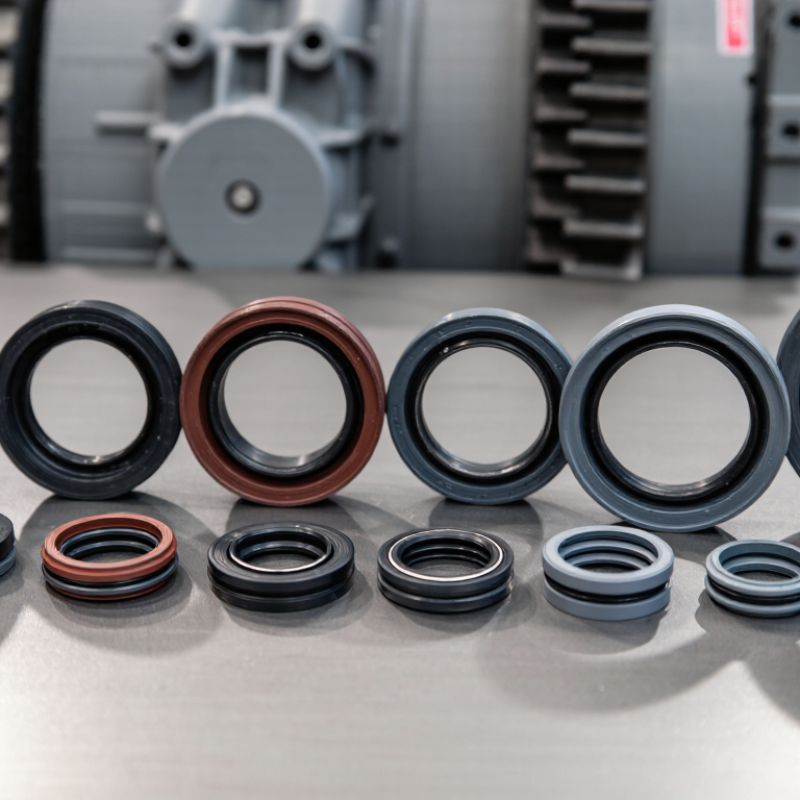
A rubber oil seal is a flexible barrier around a rotating shaft. Its inner lip touches the shaft, while its outer edge fits into the housing. Many designs use a small garter spring to keep steady contact as the shaft turns. The lip’s shape helps retain lubricant and block dust or water. It is not a perfect wall. A thin oil film can remain at the contact point, reducing friction while limiting leakage.
Performance depends on more than rubber hardness. Shaft finish, runout, temperature, lubricant chemistry, and installation pressure all matter. ASTM D2000 classifies elastomer materials by properties including heat and oil resistance; the right compound must match the actual fluid and operating temperature. For example, a seal exposed to hot oil may stiffen or swell if its material is poorly matched. That failure can look like a bad seal, even when a rough shaft or misalignment caused it.
Small parts matter. The U.S. Department of Energy’s 2014 motor-systems market assessment estimated that motor-driven systems accounted for about 68% of U.S. manufacturing electricity use. That figure does not measure seal losses, but it shows how widely rotating equipment is used. In practice, inspect the shaft surface and check for a sharp installation edge before fitting a new seal. I would not assume a leak always means the rubber has failed.

An oil seal uses a flexible lip, usually pressed against a rotating shaft, to retain lubricant and help keep contaminants out. The ranges below are typical reference values for elastomer families; actual limits depend on the compound, oil, shaft speed, and operating conditions.
Selection note: Temperature alone does not determine suitability. Check fluid compatibility: EPDM is generally unsuitable for petroleum oils, while NBR and FKM are commonly used with many petroleum-based lubricants.
Selecting an industrial rubber oil seal starts with operating conditions, not the seal’s outside dimensions. Record the lubricant, temperature range, pressure, shaft speed, and exposure to water, dust, or cleaning fluids. These details narrow material options; nitrile suits many general oil duties, while fluorocarbon compounds can tolerate higher temperatures, subject to formulation and supplier limits. Heat changes things.
Pressure and shaft speed affect lip loading and friction, so check the seal’s rated limits against actual operating peaks, not just normal readings. Inspect the shaft surface, too. A rough, grooved, or eccentric shaft can wear the sealing lip quickly, even when the seal material is appropriate. Fit and installation matter. Confirm shaft and housing dimensions, allowable runout, and specified surface finish; a small mismatch can create a persistent leak.
During installation, protect the lip from sharp edges and avoid twisting it. A little clean lubricant helps prevent dry start-up. Still, this step is easy to rush. Ask for documented compatibility and temperature data, then compare them with real service conditions. If equipment cycles frequently or runs near its limits, trial the selected seal under monitored conditions before broad use. No catalog table captures every worn shaft or unexpected fluid blend.
The 10 best rubber oil seals for industrial applications are not one-size-fits-all winners. The right choice depends on shaft speed, oil type, temperature, pressure, and contamination. For standard mineral oil service, an NBR single-lip seal is a common, practical option. A double-lip version adds a barrier against dust. A spring-loaded lip helps maintain contact as the shaft turns, while a separate dust lip can protect equipment near abrasive particles.
For hotter or chemically demanding conditions, compare FKM, HNBR, and ACM compounds against the actual lubricant. Silicone may suit some temperature ranges, but its oil compatibility needs careful checking. Other useful options include reinforced seals for added structural support, cassette seals for harsher contamination, and low-friction profiles where heat from friction is a concern. Split seals can simplify certain repairs, though they may not suit every speed or pressure. Small details matter.
Check the shaft diameter, bore, runout, surface finish, and installation direction before ordering. A seal that fits the housing can still leak if the shaft has a groove or burr. Keep the sealing lip clean, lubricate it as specified, and avoid forcing it over sharp edges. A common selection mistake is focusing on material while overlooking operating speed. Even careful choices can miss real-world wear; inspection intervals should reflect the machine’s duty cycle and leak consequences.
| Rank | Seal Type | Typical Elastomer | Typical Temperature Range | Typical Shaft Speed | Best-Suited Applications | Key Advantage |
|---|---|---|---|---|---|---|
| 1 | Spring-loaded single-lip radial oil seal | NBR | −40 to 100°C | Up to about 10 m/s | General-purpose gearboxes, pumps, electric motors, and bearing housings | Reliable shaft contact and broad availability in common metric and imperial sizes |
| 2 | Double-lip radial oil seal | NBR | −40 to 100°C | Up to about 8 m/s | Gear drives and machinery exposed to light dust, splash, or external contaminants | Primary oil-retaining lip with a secondary lip that helps exclude contaminants |
| 3 | Rubber-covered radial oil seal | NBR or FKM | NBR: −40 to 100°C; FKM: approximately −20 to 200°C | Typically up to about 10 m/s | Housings where improved static sealing or accommodation of minor bore irregularities is needed | Elastomer outer diameter can improve sealing against the housing bore |
| 4 | Metal-cased radial oil seal | NBR or FKM sealing lip | Depends on elastomer; commonly −40 to 100°C with NBR | Typically up to about 10 m/s | Machined housings with controlled bore dimensions and standard industrial service | Rigid outer case supports installation and provides a stable fit in the housing |
| 5 | Dust-lip oil seal | NBR or FKM | Depends on elastomer; commonly −40 to 100°C with NBR | Typically up to about 8 m/s | Conveyors, agricultural equipment, and drives operating in dusty environments | Additional outward-facing lip helps limit the entry of dirt and debris |
| 6 | High-temperature oil seal | FKM | Approximately −20 to 200°C | Typically up to about 10 m/s, subject to lubrication and design | Hot-running pumps, engines, and gear units exposed to elevated temperatures or oils | Better heat and many oil-resistance characteristics than standard NBR |
| 7 | Oil seal for low-temperature service | HNBR or low-temperature NBR compound | Compound-dependent; selected grades can operate near −40°C or lower | Application-dependent; commonly used at moderate shaft speeds | Outdoor machinery, cold-storage equipment, and cold-start applications | Maintains flexibility and lip contact in colder operating conditions |
| 8 | Hydrogenated nitrile (HNBR) radial oil seal | HNBR | Typically about −30 to 150°C, compound-dependent | Typically up to about 10 m/s | Industrial drives exposed to heat, oils, and moderate wear demands | Offers improved heat and abrasion resistance compared with standard NBR in many formulations |
| 9 | PTFE-lip rotary shaft seal | PTFE lip with a compatible elastomer or metal support | Design-dependent; some constructions are rated for service approaching 200°C | Can suit higher surface speeds than conventional elastomer lips when properly designed | High-speed shafts, limited lubrication, or applications where elastomer compatibility is a concern | Low friction and broad chemical resistance; installation and shaft finish are critical |
| 10 | Heavy-duty cassette seal | Often NBR or HNBR, depending on design | Compound- and design-dependent; commonly selected for the equipment’s specified range | Equipment- and design-dependent | Wheel ends, axles, and machinery exposed to mud, water, and abrasive contamination | Integrated sealing arrangement can provide multiple barriers against contaminants |
Operating ranges are representative selection guidelines, not guaranteed ratings. Actual limits depend on seal geometry, compound formulation, shaft finish, lubrication, pressure, and installation; confirm the specifications for the exact application.
Industrial equipment uses different rubber oil seal designs because shafts, fluids, and operating conditions vary. A single-lip radial seal is common in pumps, gearboxes, and electric motors. Its flexible lip contacts the rotating shaft, helping retain oil while excluding dust. A spring-loaded lip can maintain contact as the seal wears, but poor shaft finish may still cause leakage. Fit matters.
Double-lip designs add a secondary dust-exclusion lip. They suit machinery exposed to grit, splash, or washdown, such as conveyors and agricultural gear drives. The extra lip is not automatically better; added friction can increase heat at higher shaft speeds. Check the seal maker’s speed and temperature limits against actual operating conditions.
Cassette seals combine several sealing elements in a more enclosed assembly, making them useful in wheel hubs and equipment exposed to mud or abrasive debris. V-ring seals, by contrast, sit on the shaft and seal against a face, often protecting bearings from water and dirt. Material choice also matters: nitrile rubber is commonly used with mineral oils, while other elastomers may be needed for higher temperatures or different fluids. In practice, the drawing is not the whole story. Measure the shaft, inspect its wear track, and confirm fluid compatibility before selecting a design. A small mismatch can shorten service life.
A reliable rubber oil seal begins with a clean, correctly measured housing and shaft. Before fitting, remove burrs and wipe away grit that could score the sealing lip. Check the shaft for wear, grooves, or corrosion; a new seal may leak on a damaged surface. Keep it clean. Lightly lubricate the lip with a compatible oil, unless the equipment instructions specify otherwise. Align the seal squarely, then press it in evenly with a suitable sleeve. Never hammer directly. The lip should face the lubricant, and the spring must remain seated. Small alignment errors are easy to miss, even during careful work.
After installation, run the equipment at low speed when practical and inspect for leakage, unusual heat, or noise. A dry ring around the shaft may be an early warning. During routine service, check for hardened rubber, cracks, looseness, and fresh oil near the seal. Record operating hours and any changes in temperature or fluid; these details help distinguish seal wear from shaft or bearing problems. If leakage returns quickly, replacing the seal alone may not solve it. Check shaft runout, pressure, and lubricant compatibility before fitting another one. Field conditions vary, and a checklist cannot catch every fault. That is worth remembering.