Facial Microneedling devices now range from simple manual rollers to powered pens with adjustable settings. The market is growing, but growth alone does not prove a device works well or suits every buyer. Grand View Research’s Microneedling Market report estimated the global market at about USD 559 million in 2023 and projected a 7.5% compound annual growth rate through 2030. These figures describe commercial demand, not clinical results. That distinction matters.
This guide compares ten devices using practical details buyers can check: needle configuration, available settings, cartridge replacement, cleaning instructions, price, and manufacturer support. It also considers whether product claims are clear and appropriately limited. The U.S. Food and Drug Administration notes that microneedling devices may have different intended uses and risks; clearance for one use does not mean approval for every claim. A product page is not a substitute for professional advice.
Details matter here. A loose cartridge, unclear instructions, or an unexplained setting can change the buying experience. A comparison chart helps, but it cannot predict how an individual’s skin will respond. That part is less tidy. Buyers should review device instructions and seek guidance from a qualified clinician, especially when they have skin concerns or are unsure whether a device is appropriate. The aim is not to promise results, but to make the trade-offs easier to see.
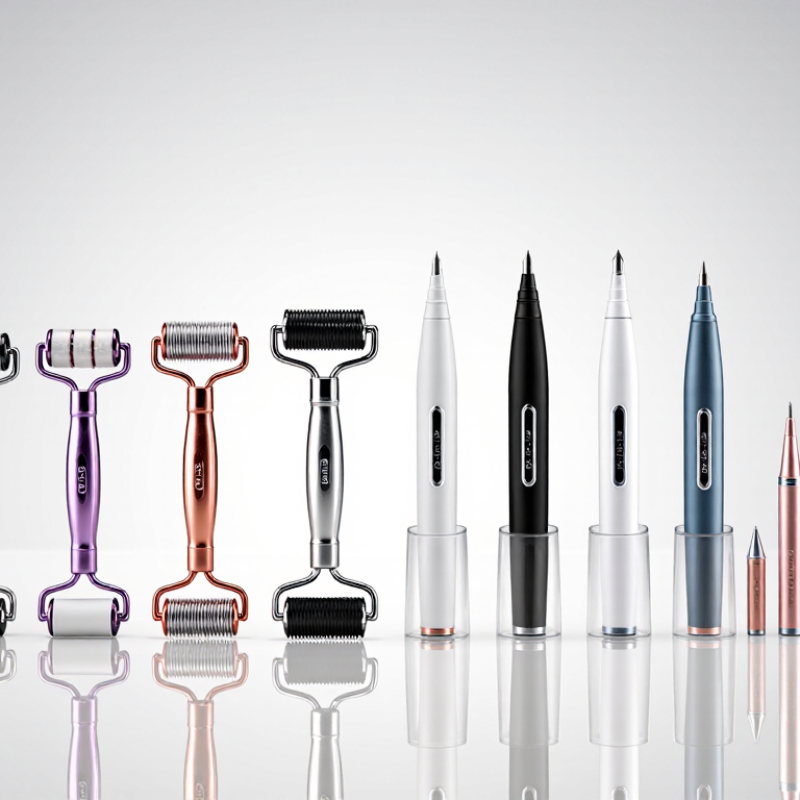
Facial microneedling devices use fine needles to create controlled punctures in the skin. The aim is to trigger a wound-healing response, which may support collagen production. The sensation can feel like light scratching, but redness and sensitivity may follow. Results vary.
Needle depth usually means the needle’s stated length or the distance it extends from the device tip. It does not guarantee that the needle enters skin by that exact amount. Pressure, angle, skin movement, and device construction all affect penetration. Not quite a ruler. Alster and Graham’s 2018 clinical review describes professional protocols using needle lengths of roughly 0.5 to 3 millimeters. That wide range reflects different treatment goals and settings, not a universal home-use guide.
A depth number can look reassuringly precise. Still, skin on the face varies by area, and the device setting is only one part of the picture. The U.S. Food and Drug Administration notes that cleared microneedling devices have specific intended uses; clearance does not mean every device or use is equivalent. Check the device’s instructions and consult a qualified clinician about suitability, especially with active skin irritation or a history of scarring. The fine print matters.
Microneedling devices use fine needles to create controlled microchannels in the skin. Depth is usually specified in millimeters as the needle’s nominal protrusion from the cartridge tip; actual penetration can vary with pressure, device, and skin area. The ranges shown are approximate clinical references, not treatment recommendations. Appropriate depth and treatment should be determined by a qualified professional.
For a “10 Best” buyer guide, FDA status matters more than a polished product photo. The FDA states that no microneedling medical devices are cleared or approved for over-the-counter sale. That is the key number: zero. Its consumer guidance also distinguishes medical devices used by trained professionals from home-use cosmetic tools. “FDA registered” or “FDA listed” does not mean a device is FDA-cleared for home microneedling.
This distinction has practical consequences. Needles can break the skin, potentially causing infection, scarring, or changes in skin color. The American Academy of Dermatology advises consumers to seek qualified professional care and notes that results and risks vary. A buyer should check whether a device makes medical claims, whether its needles penetrate skin, and whether its instructions explain cleaning and risks. Claims of “clinical strength” deserve extra scrutiny. I would not treat an online ranking as proof of safety; that assumption is easy to make, and easy to regret.
Tips: Read the FDA’s microneedling device guidance before buying. Ask a dermatologist whether the tool suits your skin and concerns. Never share needles, and do not use a device on irritated or infected skin. FDA status can be confusing. Check the wording carefully.
When comparing ten facial microneedling devices, look beyond the number of needles. Cartridge-style devices use replaceable heads, while rollers move across the skin at an angle. Their contact patterns differ, so the tool’s design and intended use matter. Check whether replacement cartridges are sealed and single-use. Small details matter.
Compare the stated depth range, but do not assume every device measures depth the same way. Skin thickness and pressure can change how needles contact the face. A clear adjustment mechanism is easier to assess than vague claims. Check the fine print. Speed settings may affect comfort and handling, but faster is not automatically better. Ask whether the instructions explain safe operation, cleaning, and areas to avoid.
Price comparisons should include more than the device itself. Add replacement cartridges, shipping, and any required accessories over several months. A low upfront price can become less attractive. Specifications may also be incomplete, which makes direct comparisons frustrating—and worth acknowledging rather than guessing. For a device that penetrates skin, consider advice from a qualified medical professional, especially if you have active irritation, a skin condition, or concerns about scarring. Home-use and professional devices may differ substantially in purpose and risk.
| No. | Device Type | Needle or Tip Type | Typical Adjustable or Fixed Depth | Speed | Approximate U.S. Price | Best Comparison Point | Important Consideration |
|---|---|---|---|---|---|---|---|
| 1 | Short-needle manual roller | Fixed-length needle roller; needle count varies by model | Usually marketed around 0.2–0.3 mm | Manual; depends on the user | About $10–$35 | Low purchase price and simple, non-powered operation | Needles can still injure or contaminate skin. Check needle material, construction, cleaning instructions, and replacement guidance. |
| 2 | Medium-needle manual roller | Fixed-length needle roller; commonly sold in several needle-count versions | Often marketed around 0.5 mm | Manual; depends on the user | About $10–$45 | Fixed depth and straightforward device format | A stated needle length is not a safe-use recommendation. Avoid treating an at-home device as equivalent to professional care. |
| 3 | Long-needle manual roller | Fixed-length needle roller | Some models are marketed at 1.0 mm or longer | Manual; depends on the user | About $15–$60 | Useful for comparing fixed-length roller designs | Longer needles carry greater risk of pain, bleeding, infection, and scarring. This is not a suitable DIY facial category; seek professional guidance. |
| 4 | Short-needle manual stamp | Flat, fixed needle array pressed vertically onto the skin | Often marketed around 0.2–0.3 mm | Manual; press-by-press | About $15–$50 | Vertical application rather than a rolling motion | Tip design, sterility, and whether the head is replaceable matter. Do not share a device or cartridge. |
| 5 | Adjustable professional-style stamp | Vertical needle array; replaceable or fixed head depending on model | Some models advertise a range such as 0.25–1.5 mm | Manual; press-by-press | About $25–$100 | Depth adjustment and replaceable-head availability | Adjustable depth does not make a device appropriate for home use. Longer settings require assessment by a trained professional. |
| 6 | Electric pen with 12-pin cartridge | Disposable or replaceable 12-pin cartridge | Many models advertise approximately 0.25–2.5 mm | Powered; commonly several speed settings, often about 3–6 | About $50–$200 | Cartridge availability, depth controls, and ease of handling | Specifications vary substantially. A displayed depth or speed setting does not confirm performance, safety, or regulatory authorization. |
| 7 | Electric pen with 16-pin cartridge | Disposable or replaceable 16-pin cartridge | Many models advertise approximately 0.25–2.5 mm | Powered; multiple speed settings, model-dependent | About $50–$220 | Availability and cost of compatible replacement cartridges | Confirm that cartridges are sterile, single-use, and made for the specific device; pin count alone does not indicate treatment quality. |
| 8 | Electric pen with 24-pin cartridge | Disposable or replaceable 24-pin cartridge | Many models advertise approximately 0.25–2.5 mm | Powered; multiple speed settings, model-dependent | About $60–$250 | Depth adjustment, cartridge locking, and replacement-part supply | Needle count and advertised speed are not standardized comparison measures. Professional use is the safer option for skin-penetrating treatments. |
| 9 | Electric pen with 36-pin cartridge | Disposable or replaceable 36-pin cartridge | Many models advertise approximately 0.25–2.5 mm | Powered; multiple speed settings, model-dependent | About $60–$250 | Cartridge cost, device warranty, and clear operating instructions | More pins do not automatically mean better results. Avoid use on irritated, infected, or injured skin and follow qualified medical advice. |
| 10 | Electric pen with nano-tip cartridge | Nano-textured cosmetic tip; generally not a conventional penetrating needle array | No standard needle depth; typically intended for surface-level cosmetic use | Powered; speed settings vary by model | About $50–$250 | Useful to distinguish surface-level cosmetic tips from needle cartridges | “Nano” is not a standardized performance term. Verify the tip design and intended use; do not assume it provides the same treatment as microneedling. |
How to read this comparison: These are representative device categories, not rankings of specific products. Depth ranges, speed settings, cartridge designs, and prices vary by model and seller. U.S. price ranges are approximate device-only estimates and may exclude replacement cartridges, shipping, or taxes.
Safety note: A device’s advertised needle depth is not a recommended treatment depth. The U.S. FDA states that it has not cleared microneedling devices for over-the-counter sale and that FDA-authorized microneedling devices are intended for use by trained health care professionals. Consult a qualified clinician before considering a skin-penetrating treatment.
A manual stamp suits small areas, such as the sides of the nose, where controlled placement matters. A roller covers broader zones but needs careful handling to avoid dragging. A corded pen offers steady power for longer sessions, while a cordless pen is easier to maneuver at home. Less setup helps.
An adjustable-depth pen may appeal to experienced users, but deeper settings are not automatically better. A fixed-depth cosmetic device keeps choices simpler. A pen with sealed, single-use cartridges supports cleaner handling; never reuse a cartridge. A compact travel device is convenient, though travel should not mean rushed treatment. A clinic-grade pen belongs with a trained professional, especially when treating scars or texture concerns. A device paired with light features may attract buyers seeking multiple functions, but extra features do not guarantee better results.
Match the device to your goal and setting. For mild texture concerns, favor clear instructions, reliable speed control, and easy-to-clean surfaces. For persistent acne scars, pigmentation, or sensitive skin, consult a qualified clinician before choosing a device. At-home tools should not break the skin deeply. Avoid treatment over active irritation, infection, or healing wounds. Check cartridge compatibility and replacement costs, too. A tempting feature can become needless complexity; I would weigh handling and hygiene more heavily than a crowded control panel.
A home microneedling device is not a harmless roller. The FDA has identified risks including infection, scarring, pigment changes, and damage to skin or underlying tissue. Redness and pinpoint bleeding may occur, but worsening pain, warmth, swelling, pus, or fever needs prompt medical attention. Stop using the device if symptoms concern you. Small wounds can become serious.
Do not needle over active acne, cold sores, rashes, or broken skin. Ask a qualified health professional before use if you have a history of keloids, poor wound healing, bleeding problems, or a weakened immune system. Some medicines and skin conditions can change the risk. A checklist cannot replace an individual assessment.
After treatment, keep hands and the treated area clean, and follow the device’s specific instructions. Avoid makeup and irritating products, such as retinoids or exfoliating acids, until the skin has settled; ask a clinician when to restart them. Use gentle cleansing and sun protection, and do not share or reuse single-use parts. Be cautious with numbing creams or serums: needling can change how ingredients enter the skin, and reactions may follow. Healing is not always tidy. If redness or discomfort keeps getting worse, contact a healthcare professional.