Choosing the best Car Window Film in 2026 is less about finding the darkest glass and more about matching performance to your daily drive. A film that keeps a parked cabin cooler may not offer the clearest night visibility. Your priorities matter: heat reduction, glare control, appearance, and clear sightlines can point to different choices.
Darrell Smith, executive director of the International Window Film Association, is a relevant industry voice on window-film education. A useful editorial paraphrase of a consumer-first approach is: “Judge film by measured performance, not darkness alone.” This is a paraphrase, not a verified verbatim quotation. Look for product specifications, including visible light transmission and infrared or total solar energy rejection. Ask how those figures were measured; labels can make unlike products seem comparable.
Details matter. Notice how a sample looks against your car’s interior, and consider visibility in rain or at dusk. Ceramic, carbon, and dyed films can differ in cost, appearance, and performance. No material wins in every situation. Installation quality also affects the result: dust beneath the film, uneven edges, or early bubbling can spoil an otherwise suitable choice. A careful comparison should weigh documented performance, warranty terms, installer experience, and your driving conditions. We will examine these factors and explain what “best” can realistically mean for different drivers. One caveat remains: marketing claims deserve scrutiny, and a polished sample is not proof of real-world results.
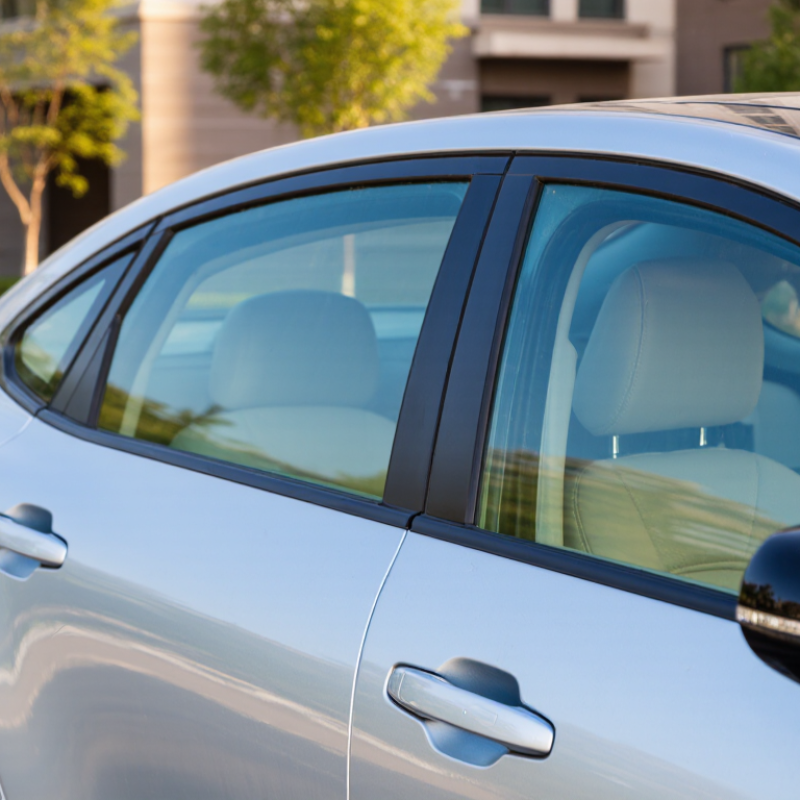
Car window film is a thin, multilayer sheet fitted to the inside of automotive glass. Its purpose is to manage sunlight, not make a window opaque. Depending on its construction, film can absorb or reflect portions of ultraviolet, infrared, and visible light. That changes how much heat, glare, and fading exposure enters the cabin. A darker appearance is only one clue; shade alone does not show how well a film rejects heat. Small detail, big difference.
On a bright commute, film may soften sharp glare and make seats feel less hot after parking. It can also help slow upholstery fading, though sunlight still enters through untreated glass and other openings. Film does not replace air conditioning or guarantee protection from glass breakage. Installation matters: dust, trapped moisture, or uneven edges can leave bubbles and affect clarity. Even good film can disappoint when expectations are too high. Compare measurements for visible-light transmission, ultraviolet blocking, and total solar-energy rejection, then consider night visibility and the car’s existing glass. The right choice depends on your driving conditions, not simply the darkest sample.
Window film is a thin material applied to the inside of vehicle glass. The best choice depends on whether your priority is appearance, heat management, UV protection, visibility, or minimizing interference with electronic signals.
| Film Type | How It Works | Designed to Do | Potential Advantages | Considerations | Best Suited For |
|---|---|---|---|---|---|
| Dyed film | Uses dye within the film to absorb some visible light and reduce glare. | Darken the glass and improve privacy and appearance. | Can provide a non-reflective look and is generally an entry-level option. | Heat rejection and color stability vary by product; some dyed films may fade over time. | Drivers prioritizing appearance and basic glare reduction. |
| Metallized film | Contains microscopic metal particles that reflect and absorb portions of incoming solar energy. | Reduce solar heat and glare while adding a reflective appearance. | Can offer stronger heat control than basic dyed film, depending on its construction. | Metal layers may interfere with some electronic signals, such as cellular, GPS, or radio reception; the effect depends on the vehicle and film. | Drivers seeking solar-heat reduction who do not rely on signal-sensitive equipment through the glass. |
| Carbon film | Uses carbon-based particles to absorb and manage solar energy without a metallic reflective layer. | Reduce glare and solar heat while maintaining a relatively matte appearance. | Typically avoids the signal-interference concern associated with metallic layers. | Performance varies by product; the film’s shade alone does not indicate its heat-rejection performance. | Drivers wanting a darker, non-metallic film with a subdued finish. |
| Ceramic film | Uses non-metallic ceramic particles to selectively manage portions of the solar spectrum. | Reduce heat and glare while preserving visibility and avoiding a metallic appearance. | Can provide substantial infrared heat rejection without relying on metal; signal interference is generally not a defining concern. | Product specifications and test methods differ, and ceramic films often cost more than basic dyed options. | Drivers seeking a balance of heat control, clear visibility, and signal compatibility. |
| Clear UV-protective film | Uses UV-absorbing or UV-blocking materials while allowing a high proportion of visible light through. | Help reduce ultraviolet exposure and protect interior materials without noticeably darkening the windows. | Can add UV protection where a light or nearly clear appearance is preferred. | UV performance and visible-light transmission should be checked in the product specifications; clear film does not necessarily provide strong heat rejection. | Drivers who want UV-focused protection while keeping the glass light. |
How to compare films: Check the published visible light transmission (VLT), total solar energy rejected (TSER), ultraviolet rejection, and warranty terms. VLT describes how much visible light passes through the film and glass; local laws may set minimum VLT requirements. Heat-rejection figures can depend on the tested wavelengths and methods, so compare products using the same measurement standard when possible. Film does not replace safe driving practices or vehicle maintenance.

