Choosing the best autonomous robot dog starts with a practical question: what must it do on your site? A machine inspecting a dim utility corridor needs reliable navigation, obstacle detection, and useful sensor data. One patrolling a warehouse may need long battery life, clear alerts, and simple integration with existing systems. The same four-legged frame can serve very different jobs.
The market is growing, but broad robotics figures should not be mistaken for dog-specific sales. The International Federation of Robotics reported that sales of professional service robots reached nearly 200,000 units in 2023, up 30% from the previous year. That signals rising adoption across industries, not proof that every robot dog is ready for routine deployment. IFR president Marina Bill has described professional service robotics as “a fast-growing market.” The trend is encouraging. It is not a buying checklist.
Look closely at the details: Can the robot climb the stairs you actually use? Can it operate through a full shift, then recharge without constant supervision? What happens when a sensor gets muddy or a network connection drops? Boston Dynamics founder Marc Raibert has often emphasized building robots for useful work in real environments—a principle worth applying when comparing products. Still, lab demonstrations can make hard tasks look easy. This guide weighs autonomy, payload, durability, software, support, and total cost, so you can compare claims with the work your robot must perform.
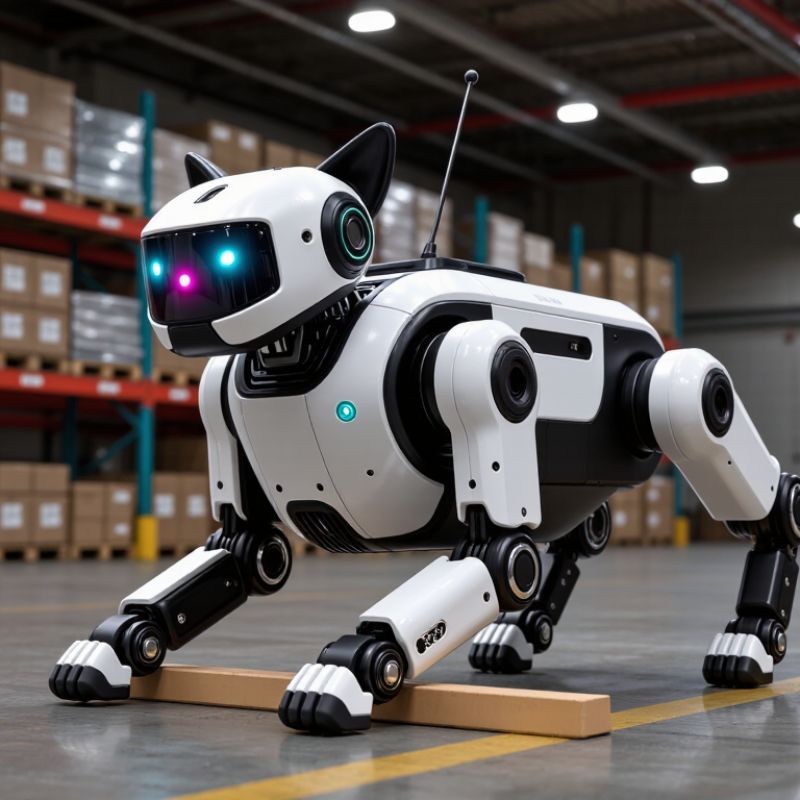
An autonomous robot dog is a four-legged machine that can sense parts of its surroundings and choose actions without constant remote control. It may use cameras, depth sensors, or other instruments to detect obstacles, estimate distances, and follow a route. Its onboard software turns those readings into movements, such as slowing down near a chair or stopping when a path is blocked. It is not simply a toy with legs. Nor is it truly independent: people still set tasks, define boundaries, and handle situations the robot cannot interpret.
The word autonomous can describe very different abilities. One model may walk a preset route, while another can adjust its steps on uneven ground or return to a charging station. Performance depends on lighting, floor texture, battery level, and how crowded the space is. A glossy hallway may be easy to map; a loose rug or low cable can be harder. Real-world testing matters. Watch whether the robot recovers from small navigation errors, explains its status clearly, and stops safely when uncertain. I would also check how much setup and supervision it needs, because product demonstrations rarely show every awkward moment. That gap is worth questioning.
| Robot Dog Category | Best Suited For | Typical Autonomy | Terrain and Mobility | Payload and Expansion | Typical Operating Time | What to Check Before Buying |
|---|---|---|---|---|---|---|
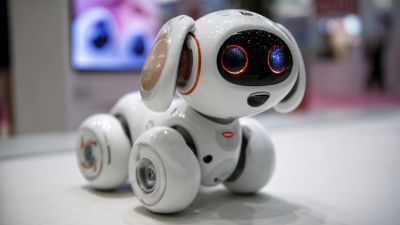
| Interactive companion robot | Home entertainment, basic interaction, and introductory demonstrations | Usually follows programmed routines or responds to simple commands; independent navigation is often limited | Generally designed for smooth indoor floors; stairs and uneven outdoor ground are usually unsuitable | Typically limited; accessories and sensors may be fixed or add-on options | Varies by model and activity; check the maker’s stated battery runtime and charging time | Confirm whether it can map rooms, avoid obstacles, work without a phone, and receive software updates |
| Educational programmable quadruped | Learning robotics, coding, sensors, and basic autonomous movement | Can support user-written programs; autonomy depends on available sensors and software tools | Often handles indoor surfaces and modest obstacles; capability varies significantly by design | May provide programming interfaces or ports for compatible sensors and modules | Check runtime under active movement, not only standby time | Look for clear documentation, supported programming languages, accessible APIs, and replaceable batteries |
| Research and development quadruped | Robotics research, algorithm development, and advanced testing | May support mapping, localization, navigation, and custom autonomy software; setup and supervision are commonly required | Some models are built for varied terrain, but performance depends on payload, slope, surface, and operating conditions | Often designed to carry research sensors or computing equipment within a stated payload limit | Battery life is strongly affected by walking speed, terrain, computing load, and payload | Verify payload capacity, sensor compatibility, software access, safety controls, spare parts, and support |
| Industrial inspection quadruped | Remote inspection of sites such as facilities, construction areas, or hazardous environments | May follow routes or assist with remote inspection; human monitoring and site-specific setup are often necessary | Selected for the intended site; confirm limits for steps, slopes, wet surfaces, dust, and temperature | Can be configured with inspection sensors, subject to payload and power limits | Check the stated mission runtime with the planned sensors and workload installed | Assess environmental protection, communications coverage, emergency stop, data security, and service availability |
| Outdoor exploration quadruped | Supervised field demonstrations and exploration on paths or uneven ground | May combine obstacle sensing with route following; autonomous operation in unfamiliar areas is not guaranteed | Capability depends on leg design, sensor visibility, ground conditions, and weather protection | Usually limited by the robot’s rated payload and the added weight of sensors or equipment | Expect operating time to decrease with difficult terrain, frequent climbs, cold conditions, or heavier loads | Check weather rating, terrain limits, navigation performance, recovery options, and safe operating distance |
How to choose: For most buyers, the best option is the category that matches the intended task, not the one with the most advertised features. “Autonomous” can mean anything from running a preset routine to navigating a mapped route; verify which functions work in practice and whether supervision is required. Operating time and terrain capability vary by model, payload, battery condition, and environment.