What is an AI Walking Robot? Understanding Its Features and Applications
The rapidly evolving field of robotics has witnessed significant advancements, particularly with the emergence of AI walking robots, which are designed to mimic human locomotion and operate autonomously in various environments. Renowned roboticist Dr. Emily Carter, an expert in the integration of artificial intelligence and robotics, emphasizes the transformative potential of these machines: "AI walking robots are not just innovations; they represent a profound step toward a future where machines can seamlessly interact with the world around us."
These sophisticated robots leverage artificial intelligence algorithms to navigate complex terrains and perform tasks that require adaptability and precision. The AI walking robot’s ability to learn from its surroundings opens up a diverse range of applications, from aiding in disaster response to enhancing rehabilitation practices in healthcare settings. As industries continue to explore the capabilities of AI walking robots, the importance of understanding their features and functionalities becomes increasingly crucial for harnessing their potential to benefit society.
In this exploration, we will delve into the defining characteristics of AI walking robots, their diverse applications across various sectors, and the implications of their integration into daily life. As we stand on the brink of a robotic revolution, grasping the nuances of AI walking robots is essential for grasping the future possibilities of this cutting-edge technology.

Definition and Overview of AI Walking Robots
AI walking robots are advanced machines designed to mimic human locomotion and navigate varied environments autonomously. These robots leverage artificial intelligence, machine learning, and sophisticated sensors to interpret their surroundings, make decisions, and adapt their movements. Their construction typically includes articulated joints, enabling them to model the natural gait and balance of humans, making them capable of traversing complex terrains such as stairs, uneven surfaces, and obstacles.
The applications of AI walking robots are vast and varied. In healthcare, they are being developed for rehabilitation purposes, assisting patients in regaining mobility and strength. In the field of search and rescue, these robots can access hazardous environments that are unsafe for humans, improving emergency response efforts. Furthermore, their potential in education and entertainment is being explored, providing interactive learning experiences or companionship. As advancements in AI and robotics continue, the functionality and effectiveness of walking robots are expected to grow, expanding their roles across different sectors.
What is an AI Walking Robot? Understanding Its Features and Applications
| Feature |
Description |
Applications |
| Mobility |
Ability to walk and navigate diverse terrains using advanced algorithms. |
Search and rescue operations, exploration, and logistics. |
| Sensor Integration |
Equipped with sensors to detect obstacles, terrain changes, and environmental data. |
Autonomous navigation and data collection. |
| Artificial Intelligence |
Utilizes machine learning for decision-making and adaptability. |
Robotics research, smart cities, and personalized assistance. |
| Power Source |
Powered by batteries or fuel cells for extended operational periods. |
Industrial automation, military applications, and remote operations. |
| Communication |
Capabilities for wireless communication with other devices and systems. |
Telemedicine, remote control, and fleet management. |
Key Features of AI Walking Robots
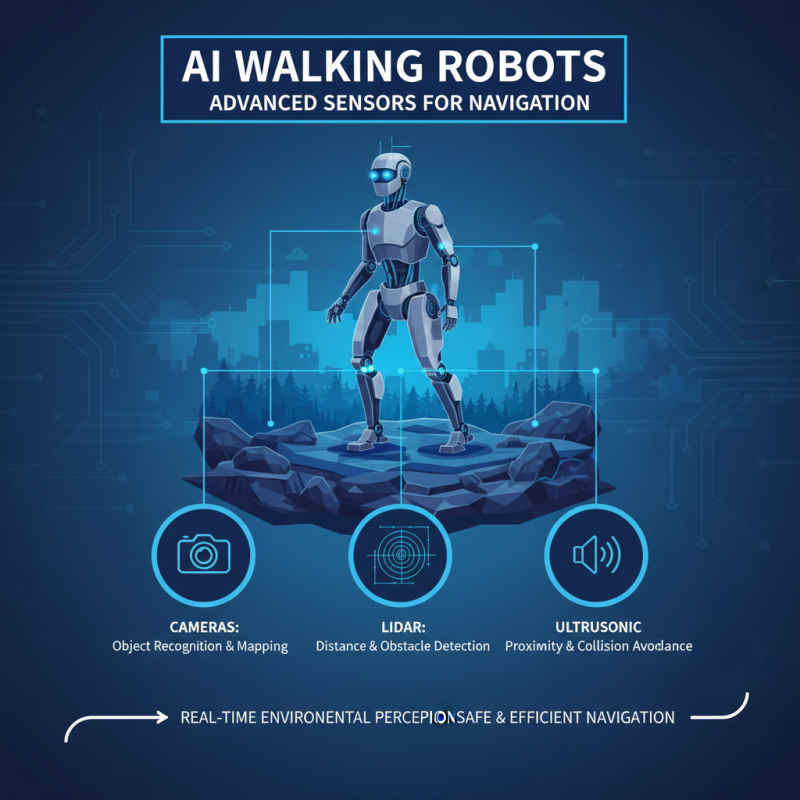
AI walking robots are sophisticated machines designed to navigate through various environments using humanoid or animal-like locomotion. One of the key features of these robots is their advanced sensors, which allow them to perceive their surroundings and make real-time adjustments to their movements. These sensors include cameras, LIDAR, and ultrasonic sensors, enabling the robots to detect obstacles, measure distances, and even recognize objects or individuals. This situational awareness is crucial for safe and efficient navigation, especially in complex and dynamic environments.
Another notable feature of AI walking robots is their adaptive learning capabilities. Through machine learning algorithms, these robots can analyze data from their interactions and improve their performance over time. This means they can learn new tasks or adapt to new surroundings without requiring extensive reprogramming. Additionally, many AI walking robots are equipped with advanced motor control systems that mimic natural movement patterns, allowing for smoother and more efficient locomotion. This versatility opens up a wide range of applications, from search and rescue operations to assistance in healthcare, highlighting the transformative potential of AI walking robots in various fields.
Technological Components Behind AI Walking Robots
AI walking robots, an intriguing frontier in robotics, are built upon several essential technological components that enable their functionality and applications. At the heart of these robots are advanced sensors, including LIDAR, cameras, and gyroscopes, which work in unison to gather data about their environment. According to a report by the International Federation of Robotics, the integration of sensors has improved navigational accuracy in robots by up to 30%, enabling them to traverse complex terrains and avoid obstacles effectively.
Another vital component is the machine learning algorithms that drive the robot's decision-making processes. These algorithms analyze vast amounts of data in real-time, allowing the robot to adapt to new environments and optimize its movements. As per a study published by MarketsandMarkets, the AI and machine learning market in robotics is projected to grow from $15 billion in 2023 to over $40 billion by 2028, reflecting the increasing significance of AI in enhancing robot efficiency and functionality.
Moreover, the mechanical design of walking robots plays a critical role in their stability and mobility. Utilizing bio-inspired designs, these robots mimic the gait and movement patterns of animals or humans, ensuring better balance and efficiency. It has been observed that robots designed with bio-inspired mechanics can improve energy efficiency by up to 20%, making them suitable for various applications such as logistics, healthcare, and disaster response. The combination of these technological components positions AI walking robots as a transformative force in numerous industries, paving the way for advancements that were once thought to be science fiction.
Applications of AI Walking Robots in Various Industries
AI walking robots are transforming various industries by enhancing efficiency and automating complex tasks. In the healthcare sector, these robots assist with patient care, providing mobility support to the elderly and disabled. By navigating through hospitals or nursing homes, they can deliver medications, transport supplies, and even monitor patients, significantly alleviating the workload on healthcare professionals.
In logistics and warehousing, AI walking robots streamline operations by facilitating the movement of goods. Equipped with advanced sensors and AI algorithms, these robots can autonomously navigate large warehouses, pick up items, and transport them to different locations. Their ability to operate in dynamic environments improves inventory management and reduces the time needed for order fulfillment. Similarly, in retail, walking robots can be used for restocking shelves and engaging with customers, providing a unique shopping experience while optimizing labor costs.
Future Developments and Trends in AI Walking Robot Technology
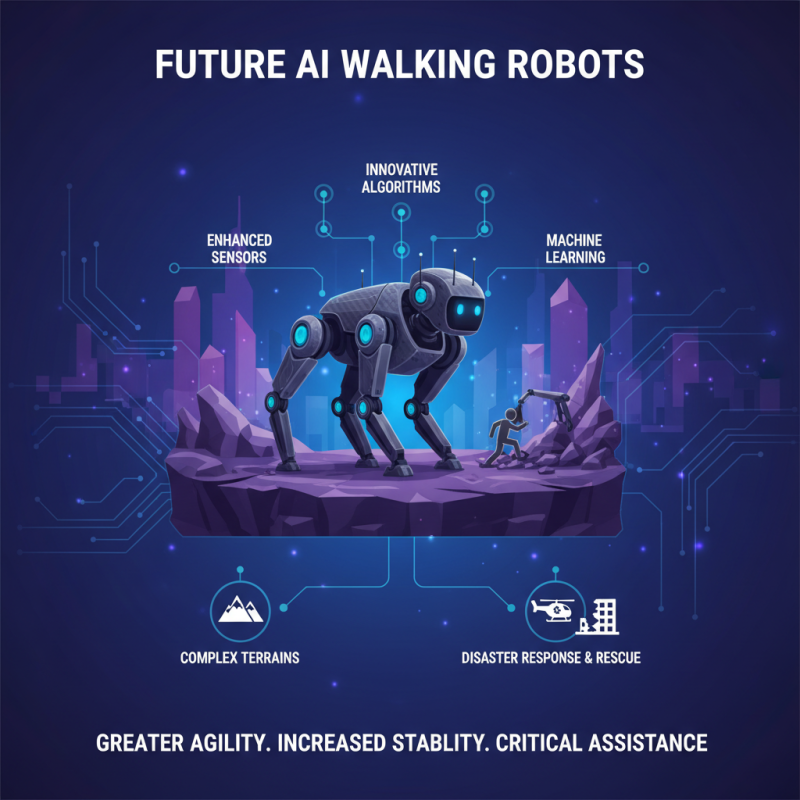
The future of AI walking robot technology is poised for significant advancements, driven by innovative algorithms, enhanced sensory capabilities, and improved machine learning techniques. As researchers continue to refine the mechanics behind locomotion, future walking robots are expected to achieve greater agility and stability. These enhancements will enable robots to navigate complex terrains, making them invaluable in sectors like disaster response, where they can assist in search and rescue operations in unpredictable environments.
In addition to physical capabilities, the integration of AI will allow walking robots to interact more intelligently with their surroundings. Future developments will likely focus on enhancing cognitive functions, enabling robots to make decisions based on real-time data. This could include learning from their experiences to adapt to new situations, enhancing their efficiency and utility in various applications such as elder care, where they could assist with mobility and everyday tasks. Moreover, as communication technologies advance, AI walking robots will likely work collaboratively in teams, sharing information and tasks to enhance productivity in industries ranging from construction to logistics. The potential for such robots to revolutionize everyday life and various industries is immense, marking a significant trend in robotics and AI technology.